
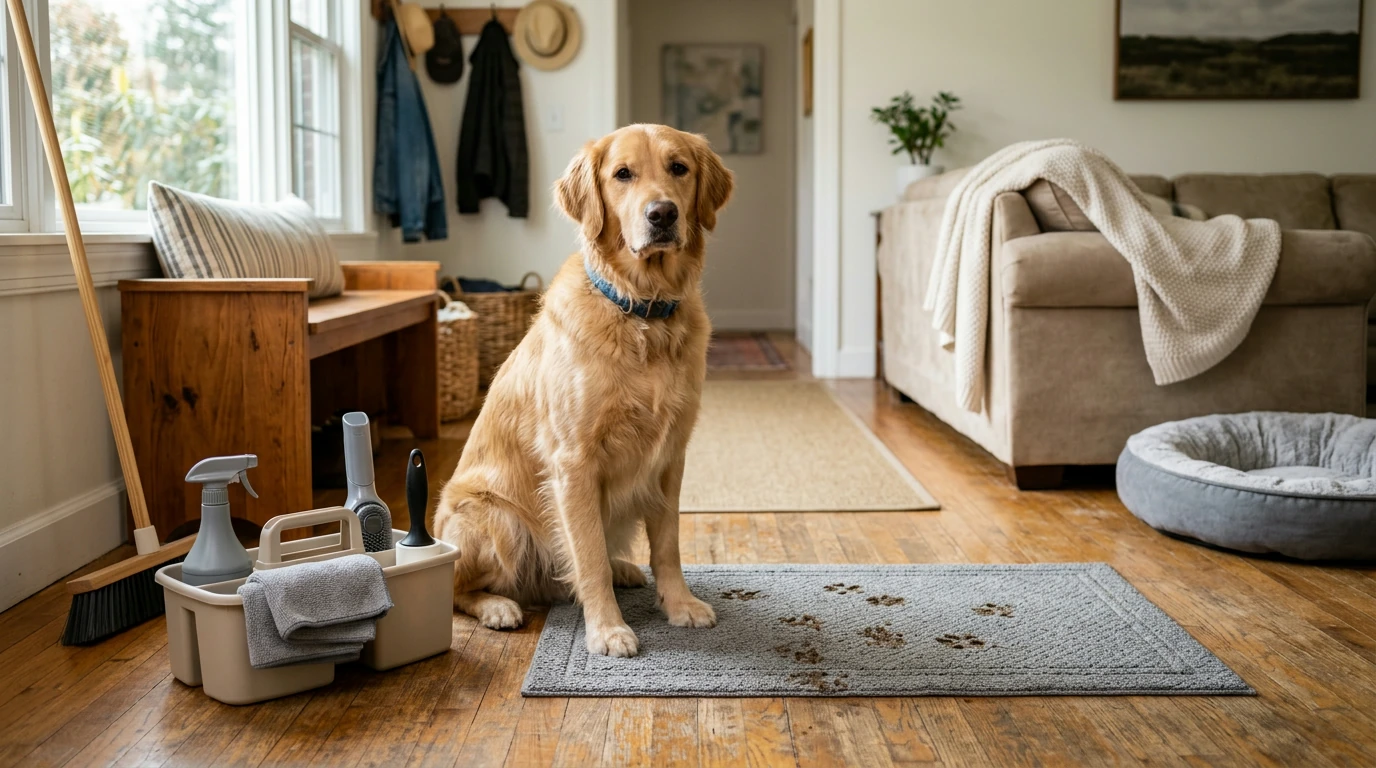
A clean home with pets is less about marathon cleaning days and more about repeatable routines that stay ahead of fur, dander, muddy prints, and lingering odors. With a few pet-smart tools and a simple schedule, it’s possible to keep floors comfortable, fabrics fresh, and “pet zones” sanitary—without making your home feel like a sterile showroom.
Before buying another cleaner or vacuum attachment, take two minutes to observe where the mess actually happens. Most pet-related cleaning is concentrated in a handful of predictable areas.
The best supplies are the ones that stay within reach and solve the real problems: hair, residue, and odors that linger after an accident.
| Item | Best for | Keep it |
|---|---|---|
| Enzymatic cleaner | Accidents and odors on fabric, carpet, sealed floors | Near litter box/entryway |
| Paper towels + microfiber | Blotting and final wipe-down | Kitchen + pet area |
| Disposable gloves | Hygiene for spot cleanups | With the caddy |
| Stain-safe spray bottle (water) | Rinsing after enzyme dwell time | With the caddy |
| Lint roller | Quick fur control on fabric | Living room/bedroom |
| Frequency | Task | Time | Why it matters |
|---|---|---|---|
| Daily | Scoop litter / pick up yard waste | 3–7 min | Stops odor and reduces bacteria/parasites |
| Daily | Wipe food/water area and shake out mats | 2–5 min | Prevents sticky grime and pests |
| Daily | Quick fur pickup (vacuum or microfiber sweep) in main zone | 5–10 min | Cuts down dander spread |
| Weekly | Vacuum rugs + upholstery + pet favorite spots | 20–40 min | Removes embedded fur and allergens |
| Weekly | Mop sealed floors (pet-safe solution) | 10–20 min | Lifts paw oils, dirt, and saliva film |
| Weekly | Wash pet blankets, couch covers, and slipcovers | Laundry cycle | Controls odors and hair transfer |
| Monthly | Clean litter box fully / sanitize feeding station | 20–30 min | Reduces persistent smells and residue |
| Monthly | Clean baseboards, vents, and window sills | 20–30 min | Targets dust + dander reservoirs |
If shedding spikes, double up on vacuuming in the busiest zones. If there’s illness or repeated accidents, prioritize targeted disinfection and hygiene best practices from trusted resources like the CDC’s Healthy Pets, Healthy People hub (https://www.cdc.gov/healthypets/index.html) and general pet-care guidance from the AVMA (https://www.avma.org/resources/pet-owners).
When life gets busy, the hardest part is staying consistent—especially during shedding season or when odor hotspots keep returning. For a structured, step-by-step routine with checklists and repeatable systems, use Fur, Paws, and a Fresh Home (digital cleaning guide). Pair a simple plan with reliable basics (microfiber, enzymatic cleaner, scheduled laundry), and the home stays fresher without long cleaning days.
Do a 5–10 minute daily pass in the main zone with a vacuum or microfiber mop, then use a lint roller for furniture. Washable throws help “catch” hair where it lands, and regular grooming reduces how much ends up on the floor.
They can, but old odors often need repeated applications and the full dwell time so the enzymes can break down the residue. On carpet, the product may need to reach the padding to fully remove the source, and you should always test fabrics first.
Scoop daily, do a more thorough wipe-down of surrounding floors and mats weekly, and fully wash/sanitize the box about monthly. For multiple cats or strong odor buildup, deep-cleaning more often can help.










Leave a comment