
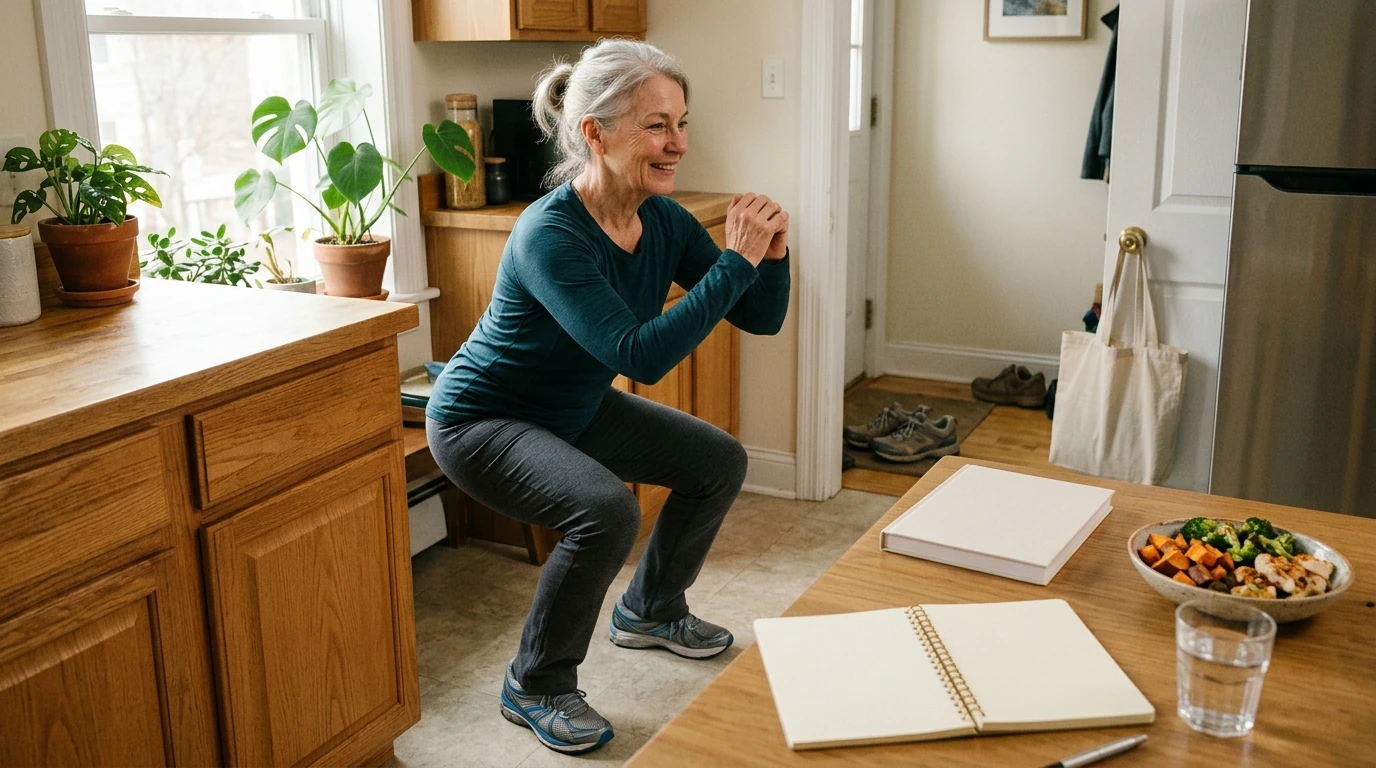
Aging can be approached as a skill set: small daily choices that protect health, strengthen identity, and keep life expanding. The goal isn’t to “stay young.” It’s to stay capable—strong enough to move confidently, clear enough to learn new things, steady enough to handle change, and connected enough to feel supported through every decade.
A more helpful lens is resilience over youth: strength, mobility, cognition, and emotional steadiness that make daily life easier and more enjoyable. That starts with dropping all-or-nothing thinking and using “minimum effective doses”—the smallest action that still moves the needle.
“Future self” planning helps: choose habits that make tomorrow easier—hydration, walk breaks, earlier bedtime, and consistent checkups. And as roles shift (career changes, caregiving, empty nest), add new roles on purpose: mentor, learner, volunteer, creator. That’s how identity stays expansive instead of shrinking.
Strength training 2–3 times weekly supports bone density, balance, glucose control, and the everyday power needed for stairs, groceries, and getting up from the floor. Focus on major patterns: squat, hinge, push, pull, and carry. Start light, progress gradually, and keep form clean—consistency beats intensity.
Five to ten minutes a day can reduce fall risk and improve joint comfort. Helpful staples include ankle and hip mobility, single-leg stands (with a counter nearby), heel-to-toe walking, and gentle spinal rotation.
Combine steady activities (walking, cycling, swimming) with brief intervals suited to your fitness level and medical guidance. Cardio supports heart health, endurance, and mood. If you’re starting from scratch, begin with “comfortable but consistent” and let duration build over time.
Protein, fiber, and hydration cover a lot of ground. Include a protein source at each meal, aim for a variety of colorful plants, and keep fluids steady throughout the day. This supports muscle maintenance, gut health, and steadier energy.
Warm up, increase training gradually, choose comfortable footwear, and plan rest days that still include light activity (easy walks, gentle stretching). Recovery isn’t laziness—it’s the system that makes progress repeatable.
| Habit | Frequency | Simple examples | Why it matters |
|---|---|---|---|
| Strength training | 2–3x/week | Bodyweight sit-to-stands, resistance bands, light dumbbells | Supports muscle, bones, metabolism, independence |
| Cardio | 150 min/week (or as tolerated) | Brisk walking, swimming, cycling | Heart health, endurance, mood |
| Mobility + balance | 5–10 min daily | Hip openers, calf stretches, single-leg stands | Fall prevention, joint comfort |
| Protein + plants | Every meal | Greek yogurt + berries; beans + salad; fish + vegetables | Muscle maintenance, gut health |
| Sleep routine | Most nights | Consistent bedtime, dim lights, cool room | Cognition, recovery, emotional regulation |
Healthy aging includes emotional skills that make stress more manageable and choices more consistent. A simple tool is “name it to tame it”: labeling what you feel (frustrated, lonely, overwhelmed) can reduce intensity and improve decision-making.
If sadness, anxiety, or withdrawal becomes persistent, getting professional support early is a form of prevention—not a last resort. For broader guidance on aging and health, reputable resources include the National Institute on Aging and the CDC Healthy Aging hub.
Preventive care turns “hope” into a plan. Keep a simple checklist: blood pressure, cholesterol, diabetes screening, cancer screenings, vision and hearing checks, and vaccinations as recommended by your clinician. The World Health Organization’s aging and health overview highlights how environments and daily habits work together to support function over time.
Prioritize strength training 2–3 times per week, regular walking or other cardio most days, protein and plants at meals, consistent sleep, and scheduled social connection. Add preventive screenings and checkups so small issues are caught early, and increase habits gradually so they stick.
Acceptance and action work together: keep regular checkups, track symptoms that persist or worsen, and use evidence-based lifestyle habits for strength, heart health, and sleep. When mental health shifts or physical limits change, getting professional guidance early helps personalize next steps.
Use a basic template: 2–3 strength sessions, light movement most days, 5–10 minutes of daily mobility/balance, a nightly wind-down for sleep, and at least one planned connection (call, class, shared meal). Keep it flexible—consistency matters more than perfection.











Leave a comment