
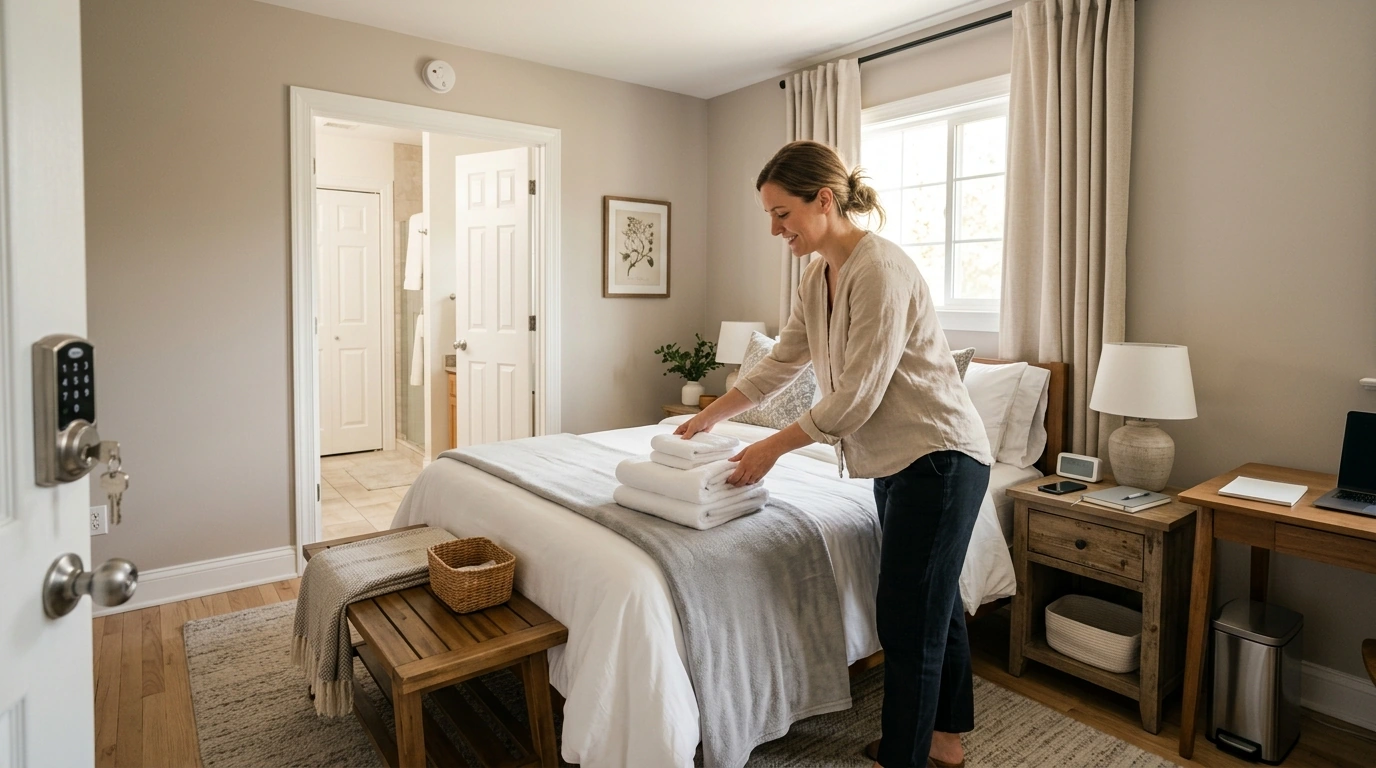
Starting an Airbnb side hustle from home can turn extra space into reliable cash flow—without buying a second property. The key is treating hosting like a simple, repeatable system: confirm rules, set up a guest-ready space, price smartly, automate communication, and protect time with clear boundaries. Below is a practical path first-time hosts can use to launch with confidence and build consistency.
Home-based hosting usually falls into a few beginner-friendly setups: a spare bedroom, an in-law suite, a basement studio, or “hosted stays” where you live on-site while guests stay in a separate (or partially shared) area. The best choice depends on your layout and how much interaction you want with guests.
Before you spend money on upgrades, make sure you’re allowed to host and that your space is safe. This step protects your household, reduces guest disputes, and helps prevent sudden shutdowns.
For official guidance and updates, review Airbnb’s Responsible Hosting resources. For smoke alarm placement and maintenance best practices, the NFPA smoke alarm guidance is a solid reference.
| Area | What to confirm | Why it matters |
|---|---|---|
| Rules & permissions | City/County short-term rental rules, HOA/lease policies, tax requirements | Avoid fines, cancellations, or forced shutdowns |
| Safety | Alarms, extinguisher, first-aid kit, safe exits, exterior lighting | Protect guests and reduce risk |
| Privacy | Locked owner storage, clearly marked private areas, camera disclosures (where allowed) | Prevents conflicts and bad reviews |
| Access | Self check-in method, backup entry plan, clear directions | Reduces late-night issues and supports smoother arrivals |
| House standards | Noise policy, visitor limits, parking plan, shared-space etiquette | Sets expectations and protects your household routine |
Early on, prioritize what guests feel immediately: cleanliness, quiet, and comfort. “Instagram upgrades” can wait until you have steady bookings and a clearer sense of what guests praise (or complain about).
If you want an easy “low-contact” upgrade for guest hygiene and odor control, a touchless bin can reduce mess and questions around trash handling. Consider the 9L Smart Sensor Trash Can – Eco-Friendly, Touchless Waste Bin for Bathroom & Kitchen for bathrooms or kitchenette corners.
A high-performing listing isn’t just pretty—it’s precise. The goal is to attract guests who will be happy with what you actually offer and avoid “surprise” complaints.
For rental income basics and tax reporting considerations, see the IRS overview on rental income.
To systemize faster, keep a single reference guide for routines, scripts, and checklists. The Steady Income Stream with Airbnb Side Hustle | Airbnb Side Hustle from Your Home eBook Guide for Beginners & Hosts is a practical add-on if you want a structured plan to follow without reinventing every step.
If you like tracking progress (especially during your first 30–60 days), a simple habit-style log can keep you consistent with restocking, deep cleans, and pricing check-ins. The Creative Hobby Progress Tracker Ideas – Digital Ebook Guide can be repurposed into a hosting routine tracker.
A spare bedroom is enough to start, as long as you set clear boundaries and describe the setup accurately. A private entrance or bathroom helps, but it isn’t required if your house rules and shared-space expectations are straightforward.
It depends on location, season, and competition, but strong photos, complete amenities, and quick responses can speed things up. Many new hosts get traction faster by starting with a competitive base price and building momentum through early reviews.
The most common issues are unclear house rules, underestimating cleaning time, slow communication, overpromising amenities, and skipping confirmation of local regulations or insurance. Checklists and message templates prevent most of these problems before they happen.









Leave a comment