
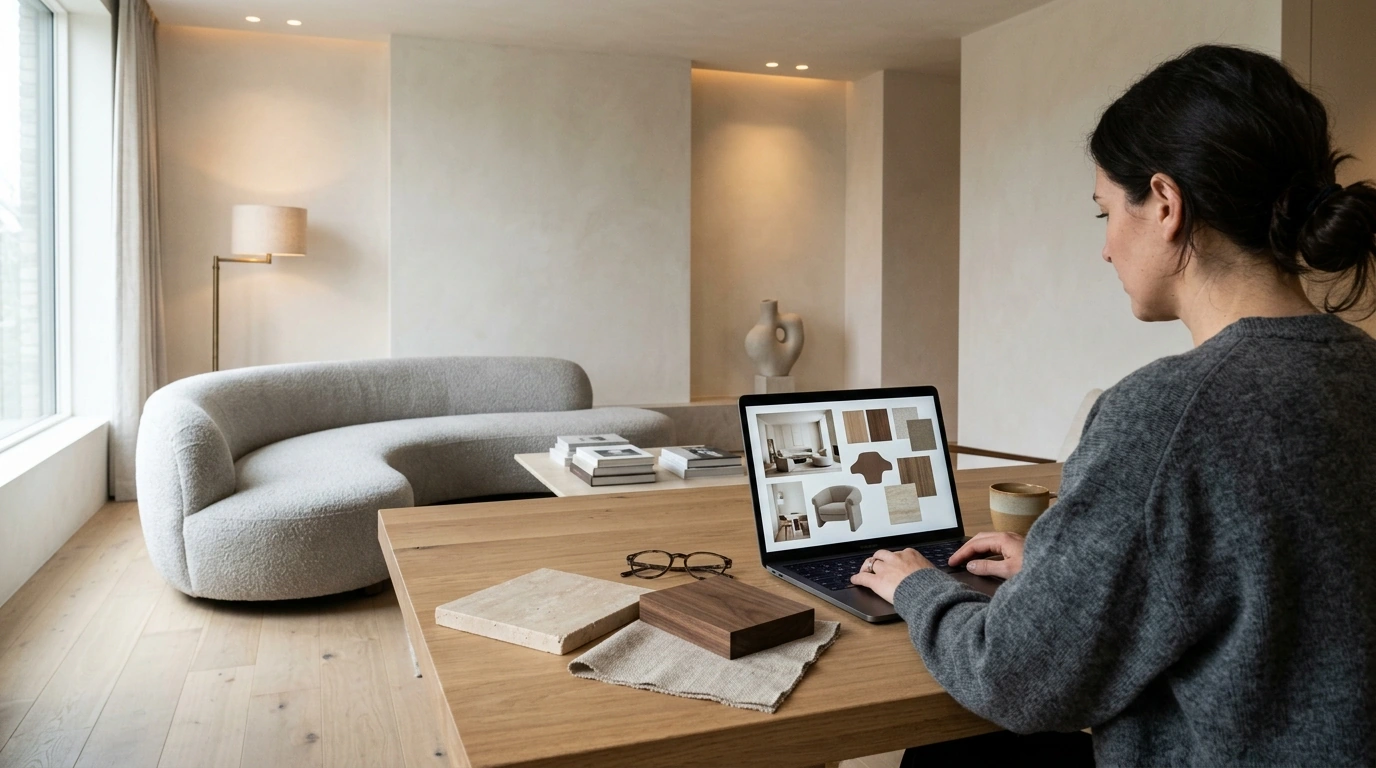
Luxury interiors are built on decisions—proportions, materials, lighting, and restraint. Our team created this digital download guide to help you turn those decisions into clear, repeatable structures for Midjourney and ChatGPT so your room concepts come out intentional instead of random. You can use it to generate elevated moodboards, iterate directions quickly, and translate a high-end vision into practical next steps for decor and layout. For more guidance, see Analysis of the application of generative artificial ….
If a room reads “expensive,” it’s usually because the design is controlled—not because it has more stuff. Here’s what consistently separates high-end results from generic ones: For further reading, see Exploring Visual Prompts: Refining Images with Scribbles ….
To keep your output cohesive, we recommend a two-track workflow: use Midjourney to explore visuals and variations, then use ChatGPT to turn your favorites into a plan you can actually execute.
| Stage | Use Midjourney for | Use ChatGPT for | Output to save |
|---|---|---|---|
| Style Direction | Visual moodboard variations with consistent palette | Style definition + must-have elements + do/don’t list | A 1-page style brief |
| Layout Exploration | Multiple compositions and camera angles | Space planning tips + furniture sizing guidelines | Top 3 layout candidates |
| Material & Finish | Texture studies (stone, wood, metal, textile) | Finish schedule + care/maintenance considerations | Material palette board |
| Lighting & Atmosphere | Day/night versions; layered lighting cues | Lighting plan: fixture types + placement logic | Lighting notes + fixture shortlist |
| Shopping & Styling | Styling scenarios (art, objects, textiles) | Shopping checklist + budget tiers + substitutions | Room shopping plan |
When you want a ready-to-use system built around that workflow, start with our AI Prompts for Luxury Room Ideas digital download guide and reuse the same framework room after room to keep your home feeling cohesive.
High-end outputs depend on specificity and constraints. Our team focuses on a “luxury stack” of details that anchor the image so your variations stay on the same design thread.
If you want deeper technical reference for the tools themselves, these are the official resources we keep bookmarked: Midjourney Documentation and the OpenAI Prompt Engineering Guide.
Instead of endlessly regenerating random views, you’ll get better results by testing a few strategic angles per room while keeping constants stable (style spine, palette, materials, and lighting temperature).
For ongoing style calibration, it also helps to keep a quality benchmark in mind. Our team often uses editorial references from Architectural Digest — Interior Design to sanity-check scale, negative space, and finish discipline.
It’s designed as a combined system: Midjourney helps you generate high-end visuals and controlled variations, while ChatGPT helps you translate your favorite concepts into plans, lists, and refinements you can act on.
They rely on specificity and constraints: a clear style spine, named hero materials, lighting cues, composition language, and negatives that remove clutter and low-end signals, plus controlled iteration that changes one variable at a time.
Yes—swap the style spine, material palette, and architectural cues while keeping the same framework, and start with a short style brief so every room output stays aligned.








Leave a comment