
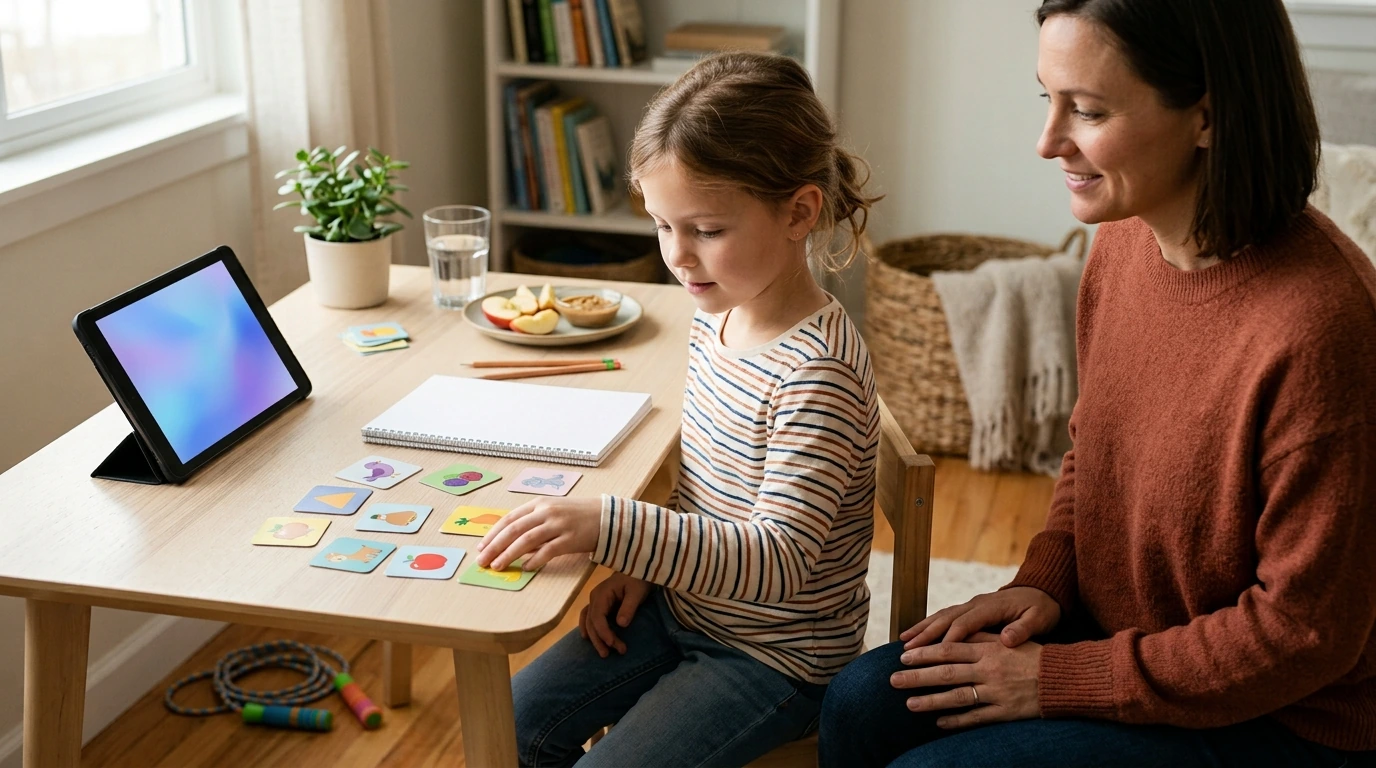
The best memory booster for kids isn’t a single pill or “miracle” drink—it’s a simple stack of kid-safe habits paired with the right tools. Our team recommends starting with the basics that reliably improve recall: consistent sleep, daily movement, hydration, and protein-forward breakfasts. Then add targeted “memory workouts” like matching games, story retelling, and spaced repetition (reviewing information in short bursts over several days). This combination builds attention first, then memory sticks.
Memory consolidation happens during sleep. A steady bedtime and wake time (even on weekends) is one of the fastest ways to improve learning, especially for school-age kids.
Ten to twenty minutes of active play—jump rope, biking, a quick sport drill—before homework can improve focus and make new information easier to store.
For most kids, the most practical “memory booster” is balancing blood sugar: a breakfast with protein + fiber (eggs and fruit, Greek yogurt and granola, nut/seed butter on whole-grain toast) plus water. If you’re considering omega-3s or a multivitamin, choose age-appropriate options and avoid high-dose blends with stimulant-like ingredients.
Pick games that require working memory: “I went to the store and bought…,” Simon-style light/sound games, matching cards, and pattern copying. Keep sessions short (5–12 minutes) and end on a win—consistency beats intensity.
Use retrieval practice: ask your child to explain what they learned without notes, then check accuracy. Follow with spaced review: revisit the same material tomorrow, then in three days, then a week later.
Skip products marketed with adult-style nootropic stacks, high caffeine, or mega-dose herbal blends. For kids, “more” can backfire with jitters, stomach upset, or sleep disruption—which hurts memory.
For a practical, parent-friendly breakdown of habits, games, and kid-safe tools (including smart ways to use AI for practice), visit our full guide: https://freshtrendshelf.com/guide-brain-boosters-for-kids-habits-games-safe-ai/.
Have them recall the lesson out loud from memory, then correct gaps together. Repeat the same recall practice briefly over several days instead of doing one long cram session.











Leave a comment