Brain Boosters for Kids: Memory-Boosting Habits, Fun Learning Strategies, and Kid-Friendly AI Tools
Strong memory skills usually don’t come from “studying harder.” They grow from everyday routines—sleep, movement, nutrition, and playful practice that helps the brain store and retrieve information. The ideas below are flexible across ages and work well at home alongside schoolwork, with simple ways to use AI tools to make practice more engaging without turning screens into a struggle.
What “better memory” looks like in kids
Memory is more than remembering facts. Kids rely on different types of memory depending on the task, and changes are often easiest to spot in day-to-day behavior.
- Working memory: Holding and using information in the moment (following multi-step directions, doing mental math, keeping track of steps in a science lab).
- Long-term memory: Storing knowledge and pulling it up later (spelling patterns, math procedures, history dates, story details).
- Attention and emotion: Focus and stress levels strongly influence recall; calmer brains tend to retrieve more reliably.
- Progress signs: Fewer reminders needed, improved story retelling, smoother homework start-up, and better recall after a day or two.
The daily foundations that make memory easier
Before adding more worksheets or apps, make sure the basics are doing their quiet work. These habits improve “encoding” (getting information into memory) and “retrieval” (pulling it back out when needed).
- Sleep: Aim for consistent bed and wake times. A predictable wind-down helps—dim lights, quiet activity, and no intense games right before bed. For age-based sleep guidelines, see the CDC’s sleep recommendations.
- Movement: A quick burst of activity (5–10 minutes) before learning can improve focus and help the brain “stamp in” new information. Learn more about exercise and brain benefits from Harvard Health Publishing.
- Nutrition and hydration: A breakfast with protein + fiber supports steadier attention. Keep water available during homework, and avoid big sugary spikes right before practice.
- Stress reduction: Use a one-minute reset before hard tasks—box breathing, slow counting, or gentle stretching. Less tension often means fewer blanks.
- Environment: Set up a “launch pad” for school items, choose a clutter-light workspace, and try a single-task rule during practice (one subject, one tab, one goal).
For screen-time boundaries that support healthy routines, check family guidance from the American Academy of Pediatrics at HealthyChildren.org.
Fun learning strategies that build memory without battles
Memory improves fastest when kids practice pulling information from their own brain—briefly, often, and with variety. These strategies can be done with paper, a whiteboard, or a simple timer.
- Spaced practice: Revisit key material over several days instead of one long session. Short “touch points” beat cramming.
- Retrieval practice: Ask for answers from memory—quick quizzes, “teach it back,” or “tell me the three main ideas”—instead of rereading notes.
- Interleaving: Mix related skills (a few math facts + a word problem + a geometry item). Switching forces the brain to choose the right tool, strengthening recall.
- Dual coding: Pair words with visuals—simple sketches, icons, timelines, arrows. Visual hooks create more ways to remember.
- Story and emotion: Wrap facts in a mini-story, funny example, or personal connection. Meaning makes information “stickier.”
- Chunking: Group information into small meaningful sets (3–5 items), then link the sets together (like building blocks).
Memory games and playful routines by age
Keep practice short, upbeat, and predictable. Ending on an easy win reduces avoidance tomorrow.
Ages 4–6
- “I packed my bag” sequence game (each person adds one item and repeats the whole list).
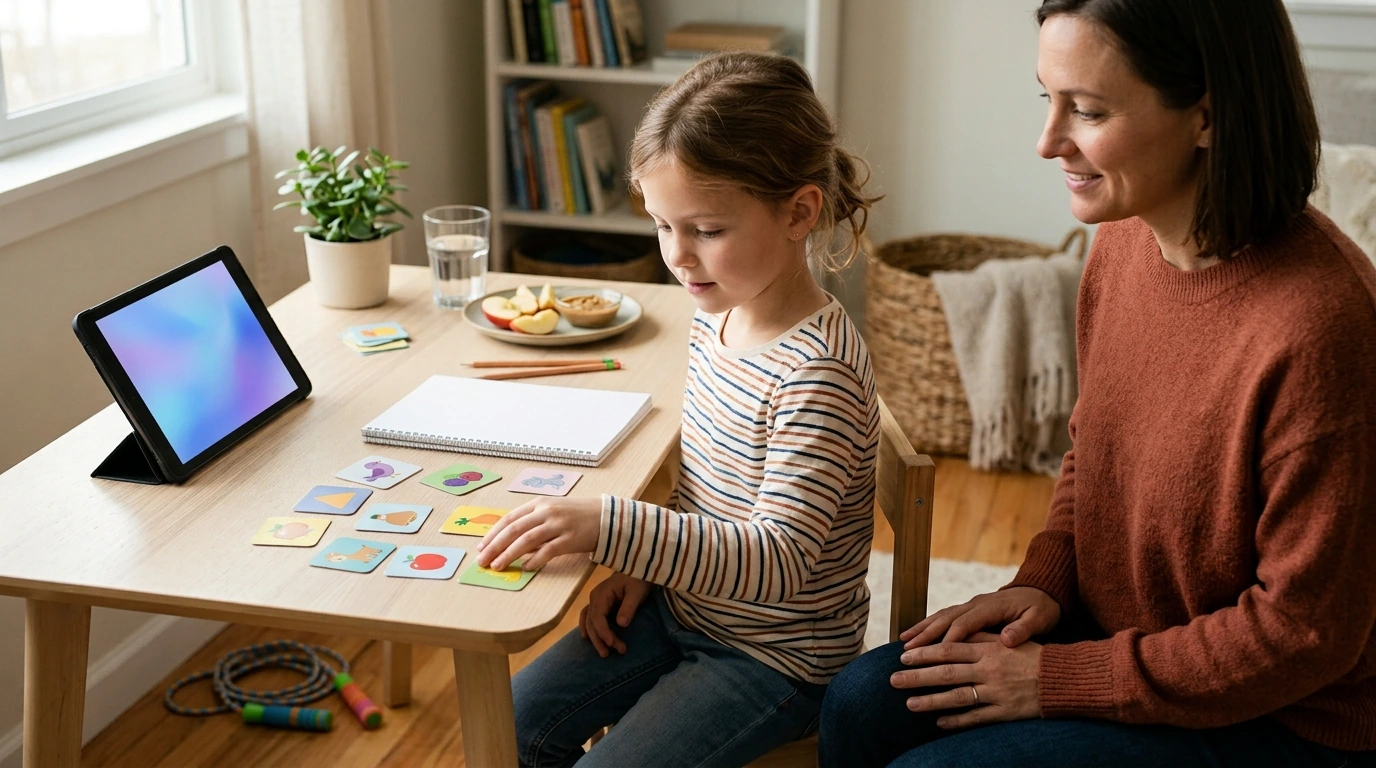
- Matching pairs with cards or picture printouts.
- Action songs (lyrics + movement boosts encoding).
- Picture retell with 3-step prompts: “First… then… last…”
Ages 7–9
Ages 10–12
Teens
A simple weekly plan (repeatable and adjustable)
Weekly brain-boost routine (example)
| Day |
Before learning (5–10 min) |
Memory builder (10–20 min) |
Fun finish (3–5 min) |
| Mon |
Movement + water |
Spaced review of last week’s material |
Teach-back to a parent or sibling |
| Tue |
Breathing reset |
Retrieval quiz (no notes first) |
Make a quick doodle/mind map |
| Wed |
Outdoor walk |
Interleaving (mix 2–3 skill types) |
Mnemonic challenge (silly sentence) |
| Thu |
Stretch + snack |
Practice test or problems set |
Story retell in 60 seconds |
| Fri |
Dance break |
Light review + fix 3 mistakes |
Choose-a-game memory round |
| Sat |
Family activity |
Creative project using what was learned |
Mini “show and tell” |
| Sun |
Calm setup |
Plan the week; set 1–2 goals |
Gratitude + early wind-down |
Using AI tools in a kid-safe way to support memory
Common roadblocks and quick fixes
A ready-to-use toolkit for parents and educators
A structured guide can reduce planning time and keep practice predictable—especially helpful when energy is low after school. For a plug-and-play approach that combines routines, memory strategies, and kid-appropriate AI practice ideas, see Brain Boosters for Kids | Guide with Tips for Boosting Memory in Kids, Fun Learning Strategies, and AI Tools.
To keep progress visible (and motivating) across weeks, a simple tracking system helps many families. Try pairing the routine above with Creative Hobby Progress Tracker Ideas – Digital Ebook Guide with Inspiring Hobby Progress Tracker Ideas for Motivation, Consistency & Growth to log review days, note what worked, and celebrate small gains.
FAQ
What are the fastest ways to improve a child’s memory for school?
Start with sleep and consistent routines, then add spaced review and short retrieval quizzes. A quick movement break before practice often improves focus and recall.
Are AI tools safe for kids to use for learning?
They can be when used with adult supervision, no personal data, clear time limits, and an emphasis on practice (quizzes and examples) instead of answer-only help.
How long should memory practice take each day?
Begin with 10–20 minutes, 4–5 days per week, plus a 2–5 minute next-day review. Increase time only after the routine feels steady and low-stress.
Recommended for you












Leave a comment