
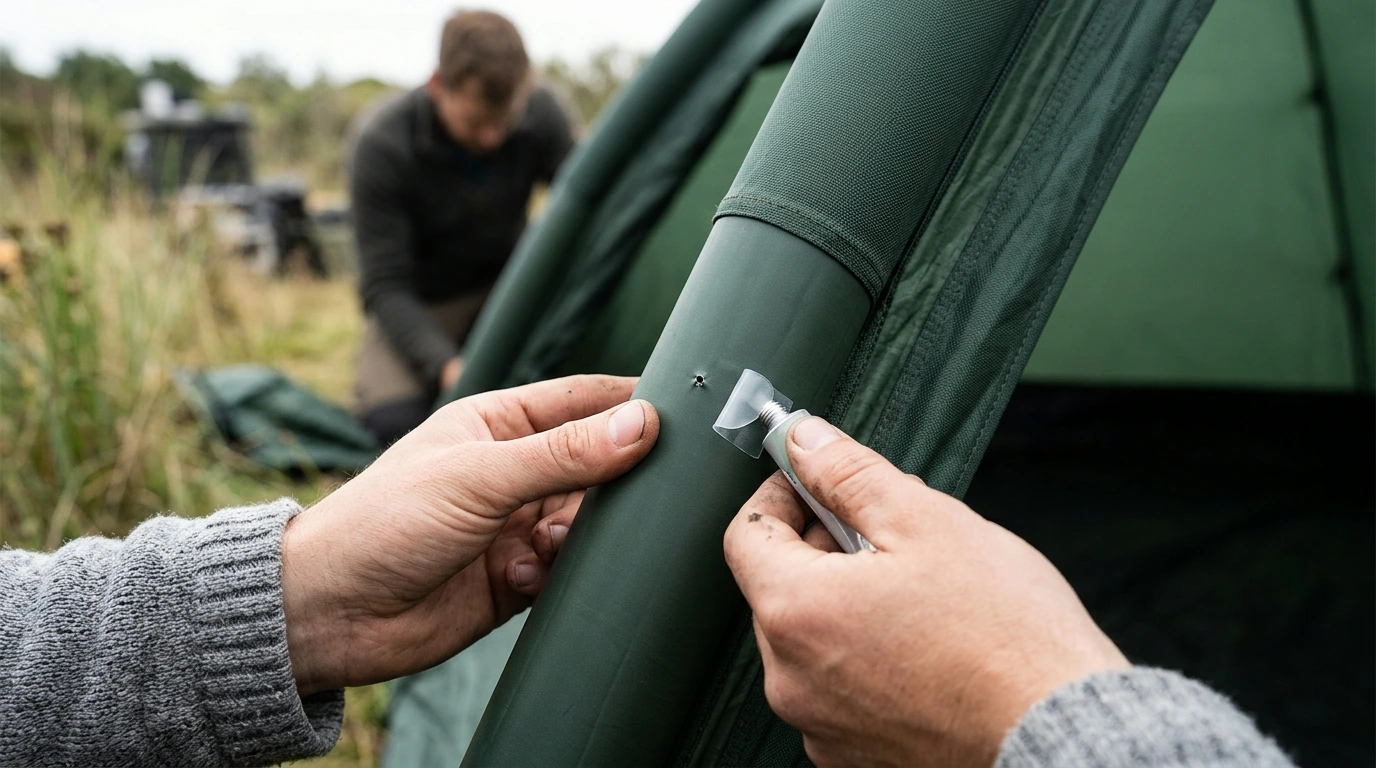
Inflatable tents do not usually get holes from normal setup and use, but their air beams can be punctured. The biggest risks are sharp objects on the ground, rough handling, and damage during storage. With a little care, you can use an inflatable tent without treating it as fragile.
Air beams replace traditional poles, so they need to hold pressure for the tent to keep its shape. Thorns, broken glass, sharp rocks, and exposed metal are worth looking for before you pitch. Dragging the tent across pavement or snagging a beam while unpacking can also cause damage.
The fabric around an air beam adds protection, but it is not a reason to ignore your campsite. Clear the area where the tent will sit, then spread it out rather than pulling it across the ground. If the site is especially rough, a properly sized groundsheet can help protect the tent floor.
Start with a clean, level spot and remove anything sharp before unfolding the tent. Inflate each beam to the pressure specified for your tent; more air is not automatically better. As you pitch, keep beams away from campfire tools, tent stakes, and other pointed gear.
Before packing up, let the tent dry and brush off grit that could rub against the material in storage. Fold it without trapping sharp accessories against the beams. We also recommend keeping the tent’s repair supplies with your camping gear, so a small puncture does not end your trip.
First, make sure the valve is closed securely. If the beam continues to soften, look and listen for a leak, paying particular attention to spots that touched rough ground or gear. A small puncture may be repairable with a patch compatible with your tent’s air-beam material; follow the repair instructions and allow the bond to set before reinflating.
If you are choosing a tent, consider both campsite conditions and how you prefer to set up camp. Our guide to a waterproof inflatable camping tent with a canopy can help you weigh the convenience of air-beam setup alongside everyday camping needs.
Often, yes. Small punctures can commonly be patched with a repair product suited to the beam material, while larger tears or damaged valves may require a replacement part.










Leave a comment