
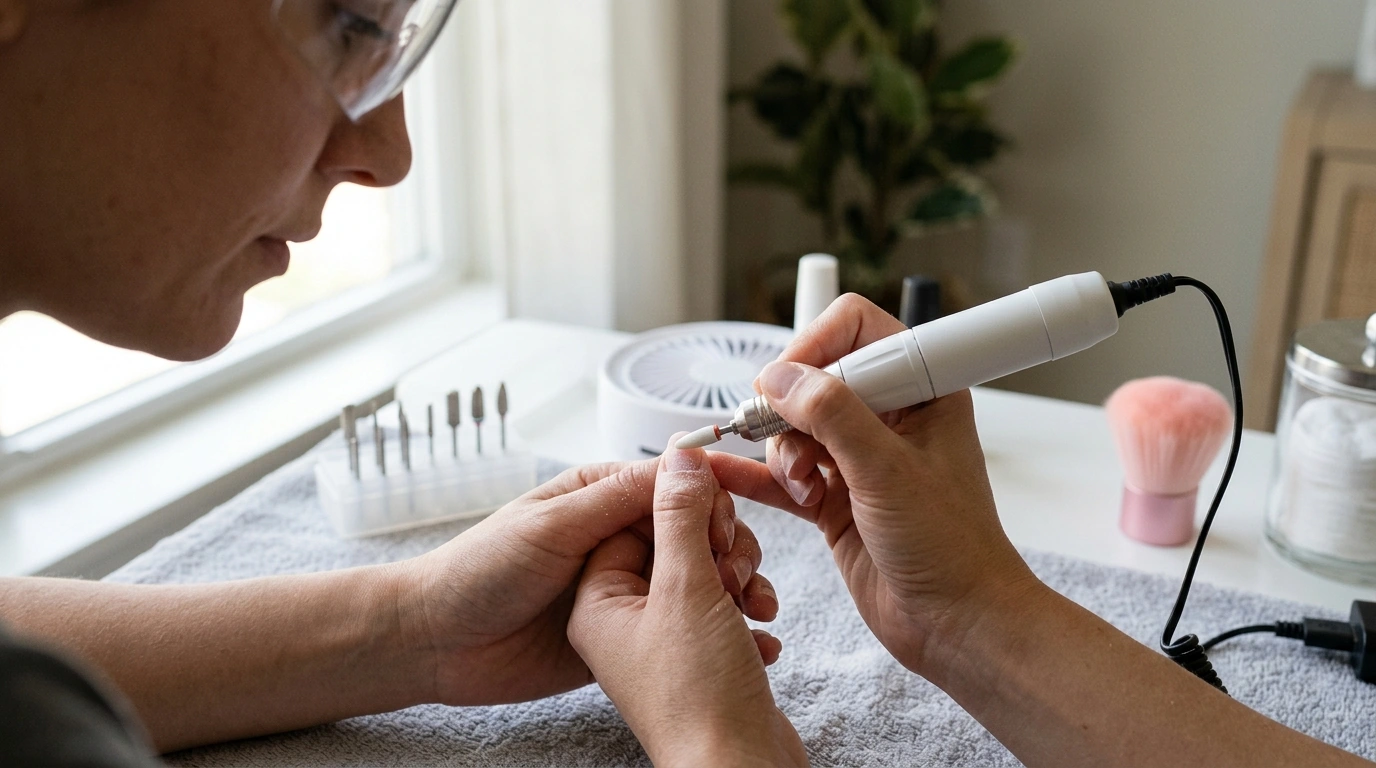
A high-RPM electric nail file can make shaping, refining, and removal faster and more consistent—when speed, torque, and comfort are balanced correctly. A 45,000 RPM USB-rechargeable nail drill is built to cover the full range of e-file steps, but the best results come from matching the right bit and RPM to the service and using light, controlled pressure. Below is a practical guide to what this type of drill is best for, how to use it safely, and how to set up your station for cleaner, smoother work.
A 45,000 RPM e-file is designed for versatility: quick refinement on enhancements, efficient product reduction, and detail work when paired with the correct bits. The top-end speed is most useful when you need efficiency on acrylic or hard gel; for natural nails and delicate areas, lower speeds and gentler abrasives matter more than max RPM.
For general safety guidance around nail products and home use, review consumer-facing recommendations from the U.S. Food & Drug Administration (FDA). For dust and exposure reduction, the CDC/NIOSH nail technician resources and OSHA’s nail salon guidance are helpful references.
Specs are only valuable if they translate into control. Look for predictable speed changes, stable torque (so the bit doesn’t stall under normal pressure), and a handpiece that stays comfortable during longer sessions.
| Task | Typical RPM Range | Suggested Bit Type | Notes for Safety |
|---|---|---|---|
| Natural nail surface refining | 3,000–8,000 | Fine sanding band or fine diamond | Use light pressure; keep the bit moving |
| Cuticle area detailing | 4,000–10,000 | Small flame/needle diamond | Avoid digging; use minimal contact time |
| Shaping acrylic/hard gel | 10,000–20,000 | Carbide or medium sanding band | Work in passes to prevent heat |
| Debulking/removal (enhancements) | 18,000–30,000+ | Coarse carbide | Stay off natural nail; finish with finer grit |
| Smoothing/top surface finish | 5,000–12,000 | Fine sanding band or buffer bit | Lower RPM reduces heat and chatter |
USB charging is ideal for flexible stations, but battery tools perform best when you treat charging and runtime like part of your workflow.
A good rule: if you need to push harder to get removal, something else should change first—bit sharpness, grit, angle, or RPM—before you add pressure.
Bits determine how smoothly the drill cuts and how much heat you generate. Start conservatively, especially when you’re learning a new handpiece or technique.
For day-to-day cleanup, a touchless bin helps contain dust wipes, paper towels, and disposable liners without re-contaminating your hands between steps. Consider the 9L Smart Sensor Trash Can – Eco-Friendly, Touchless Waste Bin for Bathroom & Kitchen for a simple station upgrade.
If you want salon-style efficiency at home (or a portable option for mobile appointments), the Professional 45000RPM Electric Nail Drill Machine with USB Charging is built for high-speed refinement with adjustable control and convenient USB power.
| Item | Details |
|---|---|
| Model | Professional 45000RPM Electric Nail Drill Machine with USB Charging |
| Power | USB rechargeable |
| Max speed | 45000 RPM |
| Price | 75.99 USD |
| Availability | In stock |
Max RPM isn’t used on natural nails. For natural nail work, stay in lower ranges (often 3,000–8,000 RPM) with fine grit, light pressure, and constant motion to avoid heat and thinning.
For gel polish, many users stay around 8,000–15,000 RPM with a sanding band or fine/medium bit and stop before reaching the natural nail. For acrylic or hard gel, debulking commonly runs about 18,000–30,000+ RPM with a coarse carbide, keeping the bit off the natural nail and finishing with a finer grit as you get close.
Heat and vibration usually come from friction (dull bit/band, too much pressure, too high RPM), an incorrect angle, or a bit that isn’t seated straight. Replace the abrasive, lighten pressure, lower RPM, re-seat the bit to eliminate wobble, and use short passes instead of holding the bit in one spot.









Leave a comment