
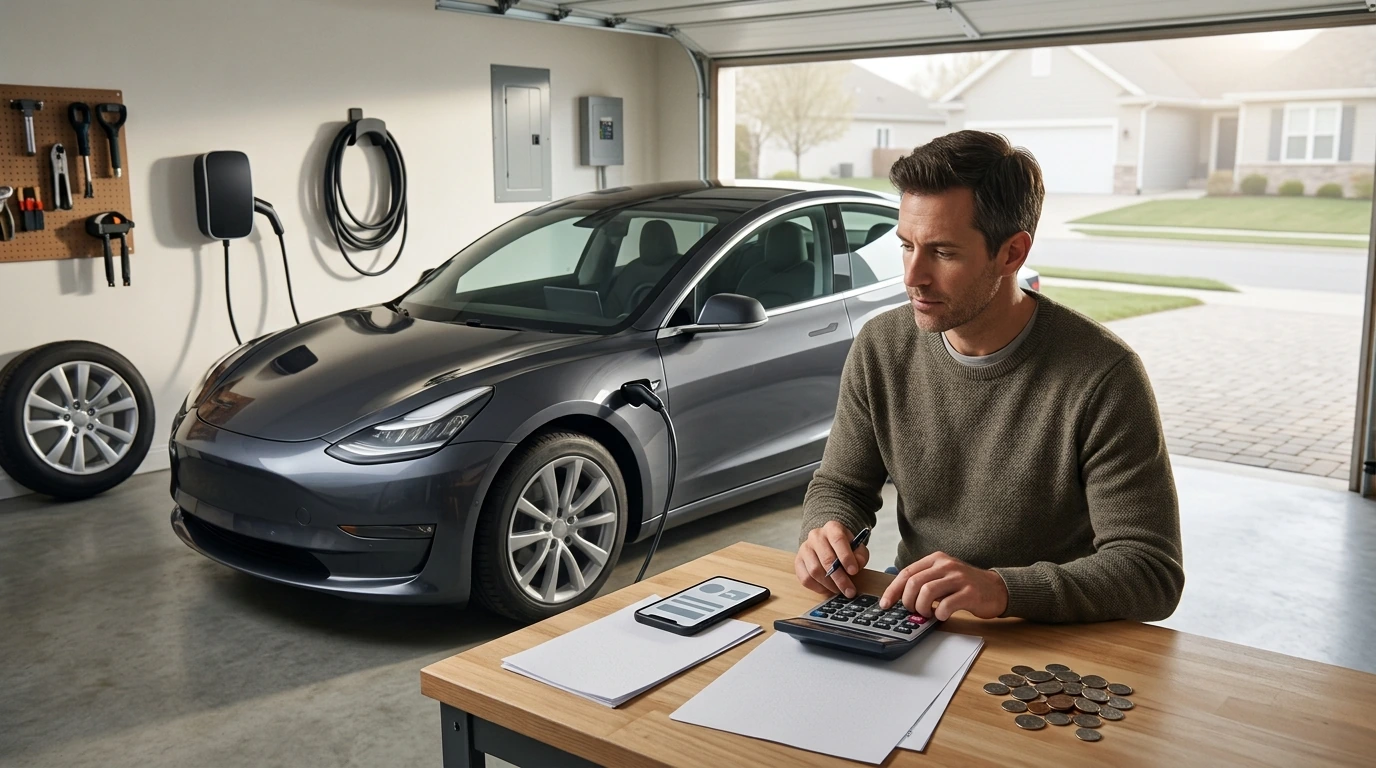
Electric cars can lower day-to-day running costs, but the full ownership picture includes charging setup, insurance, tires, registration fees, depreciation, and time-based maintenance. A checklist-style budget makes it easier to see what’s truly “monthly” versus what arrives once a year (or only once). Use the sections below to map every line item before buying, leasing, or switching from a gas vehicle—so cash flow stays steady and long-term totals stay predictable.
Upfront costs can be the difference between “this EV fits our budget” and “this EV strains the first six months.” Separate what you pay at signing from what you pay after you’re already driving.
| Cost item | What to confirm | Budget range (fill-in) |
|---|---|---|
| Vehicle + fees | Out-the-door price including dealer fees | $___ |
| Taxes/title/registration | Local EV fees and renewal timing | $___ |
| Down payment/trade-in | Net cash due at signing | $___ |
| Home charger equipment | EVSE model, cable length, warranty | $___ |
| Electrical work + permits | Panel capacity, circuit run length, permit costs | $___ |
| Accessories | Portable charger, adapters, mats, roof bars | $___ |
Depreciation is often the largest ownership cost—bigger than electricity. Model cycles, incentives, and sudden MSRP changes can move used prices quickly. Track expected resale value at your chosen horizon, not just the monthly payment. For broader EV ownership considerations and research coverage, see Consumer Reports’ electric vehicle hub and the DOE’s overview at FuelEconomy.gov.
If you want a single place to track upfront, monthly, annual, and end-of-horizon numbers, use a dedicated worksheet rather than scattered notes. The True Cost of Owning an Electric Car Checklist | Smart EV Budget Planner & Ownership Cost Breakdown is designed for scenario planning (conservative/expected/best case) so you don’t accidentally mix optimistic charging costs with conservative insurance costs.
For people who prefer a habit-based approach—logging real charging sessions and maintenance as they happen—pairing it with a tracking system can help you keep records tidy for resale. A simple companion option is Creative Hobby Progress Tracker Ideas – Digital Ebook Guide with Inspiring Hobby Progress Tracker Ideas for Motivation, Consistency & Growth, which can be adapted into a monthly “ownership log” format.
No—total cost depends on purchase price and depreciation, your charging mix (home vs. fast charging), local electricity rates, insurance, and how many miles you drive each year. High mileage with mostly off-peak home charging often favors EVs, while heavy fast-charging use and higher insurance can narrow the gap.
Costs vary widely based on whether you already have sufficient electrical capacity and a nearby circuit. Budget separately for the EVSE hardware, electrician labor, permits, and any panel or service upgrade, since upgrades can be the biggest swing factor.
Common misses include higher-than-expected insurance, faster tire wear, EV registration surcharges, public fast-charging premiums (plus idle fees), home electrical upgrades, and optional subscription features for connectivity or driver assistance.










Leave a comment