

Many teens live with a harsh inner voice that turns mistakes into “proof” they’re not good enough. That inner critic can fuel anxiety, perfectionism, procrastination, and withdrawal—especially during school pressure, social comparison, and rapid identity changes. Parents can’t erase self-doubt, but they can teach skills that help teens notice critical thoughts, respond with compassion, and build realistic confidence over time.
Teen inner-critic scripts often sound absolute and social: “Everyone is judging me,” “If I’m not the best, I’m nothing,” “I always mess up,” or “I don’t belong.” Adolescence can amplify self-criticism because peer feedback feels high-stakes, identity is still forming, academics and extracurriculars carry real consequences, and social media invites constant comparison.
Sometimes the inner critic masquerades as “motivation” (“I have to be hard on myself or I’ll fail”), but the result is often the opposite: more avoidance, stress, shame, and fewer healthy risks. It may be more than normal self-doubt when you hear frequent self-insults, see a meltdown after small mistakes, notice refusal to try new things, or observe sleep/appetite changes or persistent hopelessness. If your teen seems consistently overwhelmed, consider reviewing reputable guidance on teen stress from the American Psychological Association.
| Inner-critic pattern | What it looks like | Parent response that helps |
|---|---|---|
| All-or-nothing thinking | “I failed, so I’m a failure.” | Reflect and soften: “You didn’t get the outcome you wanted. That doesn’t define you.” |
| Mind reading | “They all think I’m weird.” | Reality-check: “What evidence do you have? What’s another possible explanation?” |
| Catastrophizing | “This will ruin everything.” | Scale it: “On a 0–10 scale, how big is this in a week? In a year?” |
| Perfectionism | Overworking, avoiding, or freezing | Set “good enough” targets: define a minimum viable effort and a stop time. |
| Harsh self-labels | “I’m stupid / ugly / useless.” | Name the thought: “That’s a brutal thought. Let’s slow down and treat it as a thought, not a fact.” |
When the inner critic spikes, teens usually need connection before coaching. Lead with validation by naming what’s happening: “That sounded really painful to hear in your head.” Avoid instant reassurance that shuts down sharing (“You’re fine,” “Don’t be dramatic,” “Just be confident”).
A useful two-step is: (1) empathy, (2) small next step. Try: “Do you want help problem-solving, or do you want me to just listen?” Keep your voice and body language calm—teens often read a parent’s stress as a signal that something is truly dangerous. If emotions are high, pause and offer a reset: water, a short walk, one song, or a brief breathing break.
Once the moment is calmer, focus on skill-building instead of debate. Introduce “thought labeling” to create distance: “I’m having the thought that…” This turns a harsh statement into something observable rather than authoritative.
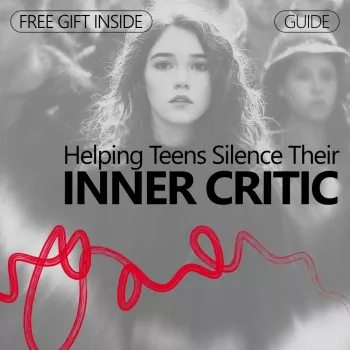
If your family does best with structure, a guided resource can make practice easier to start and easier to repeat. Helping Teens Silence Their Inner Critic – Practical Parenting Guide on how parents can help teens quiet inner critic offers step-by-step exercises, prompts, and ready-to-use scripts you can revisit during stressful seasons.
For teens who like tracking progress (and for parents who want a simple way to notice patterns), pairing skill practice with a light tracking system can help. The Creative Hobby Progress Tracker Ideas – Digital Ebook Guide with Inspiring Hobby Progress Tracker Ideas for Motivation, Consistency & Growth can be adapted for mental skills too—tracking “times I noticed the critic,” “times I used a coach phrase,” and “what helped me reset.”
Get professional support if self-criticism is persistent and severe, or if it’s linked to self-harm, disordered eating, panic, or major mood changes. Reach out if your teen’s functioning is dropping (school refusal, isolation, sleep disruption) for more than a few weeks. The AACAP overview on teen depression is a helpful reference for warning signs and next steps.
If there’s immediate risk of self-harm, seek urgent local help or emergency services. For general education on self-harm and why it can happen, see the NHS information page on self-harm.
Stay calm, validate the pain (“That sounds really heavy”), and assess safety if you’re concerned about self-harm. Avoid arguing or lecturing; reflect the emotion and offer a small next step like a reset or talking together. If it’s frequent or intense, involve a mental health professional.
They overlap, but they’re not identical: the inner critic is a pattern of harsh self-talk, while self-esteem is broader overall self-worth. Both can improve with thought-reframing, skill practice, and supportive relationships that emphasize growth over ranking.
Many teens notice small shifts within a few weeks if practice is consistent and low-pressure. Deeper change often takes months, especially when stress is high, so repetition, modeling, and tracking what reduces shame and avoidance make a difference.











Leave a comment