Park Workout Safety Checklist: Train Smart, Stay Safe
Outdoor training can feel freeing and effective, but parks add variables you don’t control: uneven ground, fast weather shifts, shared paths, and improvised equipment. A simple safety routine helps you reduce injury risk, stay aware of your surroundings, and keep your sessions consistent—whether you’re doing calisthenics, running intervals, band work, or a full-body circuit.
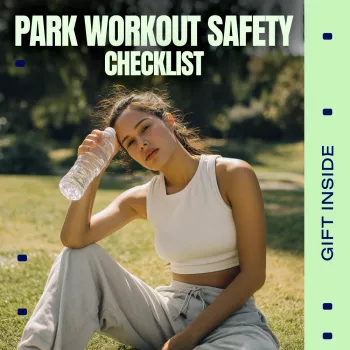
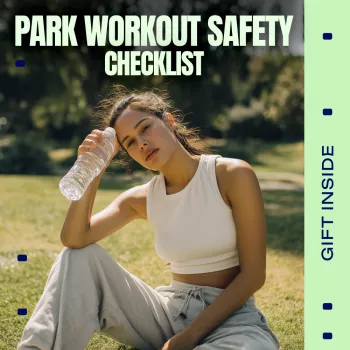
If you want something you can save and reuse, the Park Workout Safety Checklist: Train Smart, Stay Safe is a ready-to-reference guide you can keep on your phone for quick pre-session checks.
Before Leaving Home: Set Up a Safer Session
- Scan the forecast for heat, cold, wind, lightning risk, and air quality; adjust intensity and duration accordingly.
- Tell someone where you’ll be and when you expect to finish, especially for early-morning or evening sessions.
- Charge your phone and bring ID, a small amount of cash/card, and an emergency contact card if training alone.
- Pack essentials: water, sunscreen, hat, insect repellent, basic first-aid (bandage, antiseptic wipe), and any prescribed meds (inhaler, EpiPen).
- Choose clothing that supports visibility and movement: bright layers, secure footwear with traction, and minimal loose accessories that can snag.
- Plan the workout with a clear warm-up, main sets, and cool-down to avoid overreaching when you “wing it.”
A helpful habit is pairing your training plan with a simple consistency tool. If you like tracking sessions, the Creative Hobby Progress Tracker Ideas – Digital Ebook Guide can be adapted to workouts (date, location, weather, and what you’ll change next time) so safety improvements compound over time.
Arrive and Assess: Quick Park Safety Scan (2 Minutes)
- Pick a well-lit, higher-traffic area; avoid secluded corners, dense brush lines, and blind spots near structures.
- Check the ground: potholes, wet leaves, loose gravel, sand patches, and uneven pavers that increase ankle and slip risk.
- Look for environmental hazards: broken glass, sharp debris, animal waste, low branches, and exposed sprinkler heads.
- Confirm a clear personal space zone for jumps, bands, or kettlebell-style movements—no bystanders within swing or landing range.
- Locate exits and landmarks: closest street access, park office, and the fastest path back to your car or public transit.
Park Workout Safety Checklist (Print or Screenshot)
| Step |
What to Check |
Safer Choice |
| Weather |
Heat index, lightning, wind, air quality |
Move session earlier/later; reduce intensity; choose shade |
| Surface |
Wet spots, uneven ground, debris |
Relocate to dry, flat area; adjust exercises |
| Space |
Crowds, kids, cyclists, dogs |
Create a buffer zone; face traffic flow; pause when crowded |
| Equipment |
Bars/benches condition, stability |
Use only solid, non-wobbly surfaces; wipe/clean contact points |
| Hydration |
Water access, duration |
Bring water; plan refill point; add electrolytes in heat |
| Communication |
Phone battery, signal, ID |
Share location; keep phone accessible; avoid deep pockets during sprints |
| Recovery |
Cool-down route, stretching spot |
Walk down in shade; avoid stretching in isolated areas |
Warm-Up and Movement Prep: Reduce Strains and Sprains
- Start with 5–10 minutes of easy movement (brisk walk, light jog, or cycle) to raise core temperature.
- Use dynamic prep tailored to the workout: ankle rocks and calf raises for running; shoulder circles and scapular pulls for bars; hip openers for lunges and squats.
- Practice the first set at lower effort to confirm footing, grip, and range of motion before pushing intensity.
- Avoid long static stretching before explosive work; save longer holds for the cool-down when tissues are warm.
- If returning from a break or injury, cap the first session’s volume and stop 1–2 reps short of failure on strength moves.
Shared-Space Awareness: People, Pets, and Traffic Flow
- Face the main path during stationary work so approaching walkers, runners, cyclists, and dogs are visible.
- Pause sets when children enter your buffer zone; avoid jumping or swinging implements near playgrounds.
- Keep valuables minimal and secured; consider a small belt pack worn in front for quick phone access.
- Use one earbud or low volume if listening to audio; full noise isolation can reduce situational awareness.
- If something feels off (unwanted attention, escalating conflict), leave early—ending a workout is always an option.
Safe Use of Park Equipment: Bars, Benches, Stairs, and Grass
- Inspect before loading: test pull-up bars for wobble, rusted joints, sharp edges, and slippery paint or condensation.
- Treat benches and picnic tables as unstable unless confirmed solid; avoid high-impact step-ups if the surface flexes.
- On stairs or bleachers, keep speed work controlled; use the handrail area only if it’s stable and not crowded.
- On grass fields, watch for divots and sprinkler covers; reduce cutting drills if the turf is uneven or damp.
- Bring a small towel or wipes to reduce grip slip and improve hygiene when using public surfaces.
Heat, Cold, and Storm Safety: Simple Rules That Prevent Emergencies
For additional guidance, reference the CDC guidance on heat and athletes, the National Weather Service lightning safety tips, and real-time conditions from EPA AirNow (AQI).
After the Workout: Cool Down, Clean Up, and Review
A Ready-to-Use Checklist Resource
For a structured, repeatable system you can screenshot and reuse, keep the Park Workout Safety Checklist: Train Smart, Stay Safe handy before every outdoor session.
FAQ
What should be in a park workout safety checklist?
Include a weather and air-quality check, a quick scan for surface hazards, a personal space buffer, basic equipment inspection, a hydration plan, phone/ID readiness, plus a defined warm-up and cool-down.
How can outdoor workouts be made safer when training alone?
Share your location and expected finish time, train in well-lit and populated areas, keep your phone accessible, and avoid isolated zones. If your surroundings feel unsafe, leave immediately and switch locations or end the session.
When should a park workout be canceled for weather?
Cancel or move indoors for thunder/lightning risk, extreme heat when symptoms appear, dangerously icy or slick surfaces, or conditions that significantly reduce visibility and footing.
Recommended for you












Leave a comment