Sensitive Parenting, Made Practical: A One-Page Checklist for Everyday Moments
Sensitive parenting is built on noticing a child’s cues, responding with warmth, and setting clear boundaries without shame or fear. A simple printable checklist turns that intention into a repeatable practice—especially during the hard moments like tantrums, transitions, bedtime, and sibling conflict. When emotions run high, having a steady sequence to follow can help caregivers stay consistent, calm, and kind without losing the limit.
This guide breaks down what sensitive parenting looks like in real life, why it supports healthy development, and how to use a one-page checklist during the moments that tend to derail even the most thoughtful parenting.
What “sensitive parenting” looks like day to day
- Tune in: observe what the behavior might be communicating (tired, overwhelmed, hungry, needing connection, needing limits).
- Name and normalize feelings: validate emotions without endorsing harmful actions (feelings are allowed; some behaviors are not).
- Respond promptly and calmly when possible: and repair quickly when calm wasn’t possible.
- Offer co-regulation first: steady voice, presence, breathing, and proximity before expecting self-regulation.
- Use clear, brief boundaries: consistent limits without threats, lectures, or humiliation.
- Focus on teaching skills: waiting, asking, problem-solving, and “gentle hands,” rather than punishing emotions.
This approach aligns with how healthy development works: kids learn emotional skills through supportive back-and-forth interactions with adults (sometimes described as “serve and return”). For more detail, see Harvard University Center on the Developing Child.
Benefits of sensitive parenting for kids
- Emotional security: consistent, attuned responses support secure attachment and a stronger sense of safety.
- Better emotion regulation: children calm faster when adults model calm and label emotions accurately.
- Healthier behavior over time: guidance plus connection reduces power struggles and increases cooperation.
- Communication skills: kids gain language for feelings and needs, which can reduce aggression and whining.
- Resilience and problem-solving: children practice coping tools with adult support, then generalize those skills.
- Positive self-concept: respectful boundaries help kids internalize “I can do hard things,” not “I am bad.”
For additional evidence-based parenting guidance, the American Academy of Pediatrics emphasizes respectful communication, consistency, and teaching appropriate behavior—core pieces of sensitive parenting.
How a printable checklist makes gentle parenting easier
- Reduces decision fatigue: a short sequence to follow when stressed.
- Creates consistency between caregivers: shared language, shared steps, fewer mixed messages.
- Makes principles actionable: empathy and boundaries become observable behaviors, not vague ideals.
- Reveals patterns: common triggers and repeated conflicts become easier to plan for proactively.
- Strengthens repair habits: quick apologies and reconnection build trust and model accountability.
Sensitive parenting checklist: the core steps to follow
- Pause and regulate: take one breath, soften shoulders, lower voice.
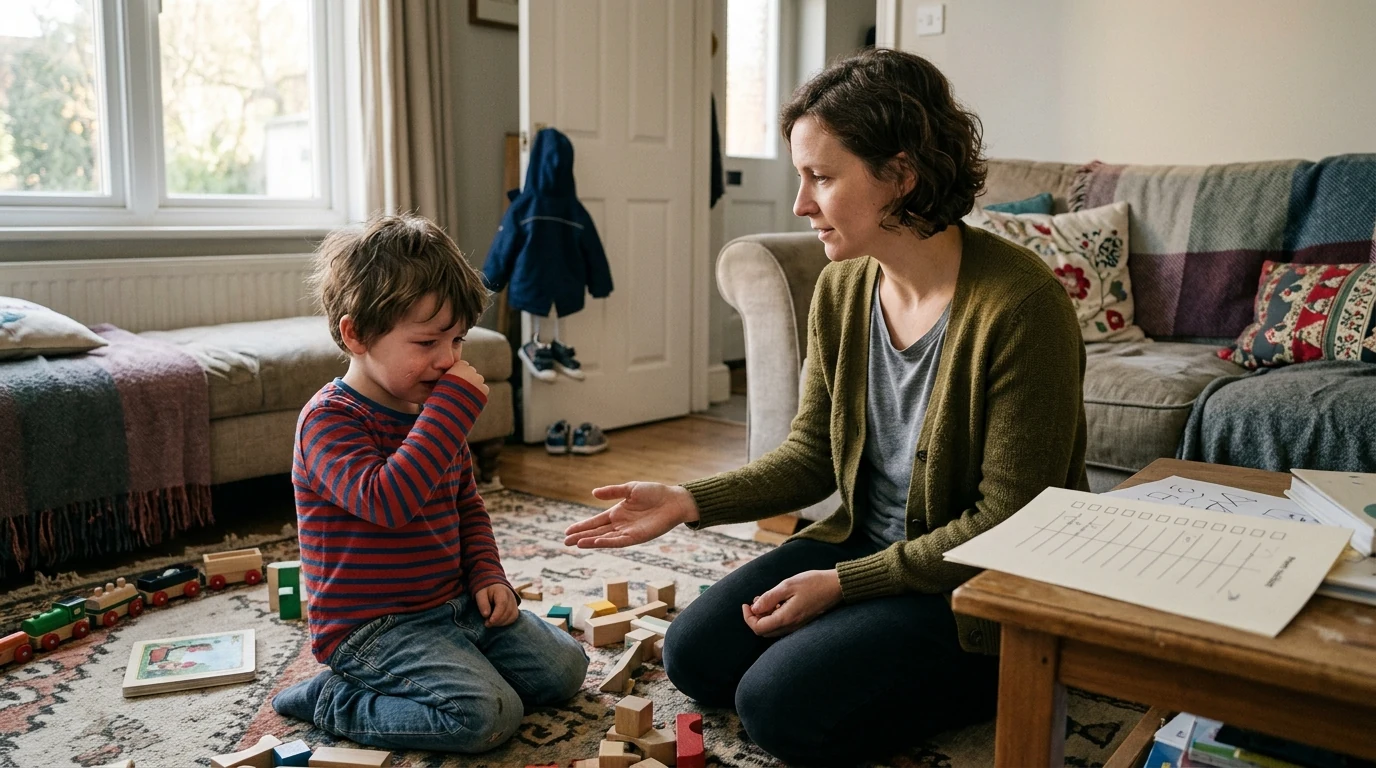
- Connect first: get to eye level (when safe) and offer a simple statement of presence (“I’m here.”).
- Name the feeling or need: “You’re frustrated you can’t keep playing.”
- State the boundary briefly: “It’s time to leave.” / “I won’t let you hit.”
- Offer a limited choice or next step: “Shoes or jacket first?” / “Hands to self—squeeze this pillow.”
- Follow through calmly: repeat once, then guide with minimal extra words.
- Repair and reflect later: validate, review what to do next time, then reconnect (hug, story, play).
Moment-by-moment examples to pair with the checklist
| Situation |
Child’s likely need |
What to say (sample script) |
What to do (support + boundary) |
| Tantrum at transition |
Predictability + support |
“You wanted more time. It’s hard to stop.” |
Give a 1-minute warning next time; offer a choice; carry out the transition calmly. |
| Hitting or throwing |
Safety + co-regulation |
“I won’t let you hit. You’re really mad.” |
Block gently; move objects; offer a safe outlet; stay close until calmer. |
| Refusing bedtime |
Connection + routine |
“You want me near you. Bedtime is still happening.” |
10-minute connection ritual; consistent steps; return brief and boring if stalling. |
| Sibling conflict |
Fairness + skill building |
“Both of you want the toy.” |
Separate briefly; describe the problem; coach turn-taking; set a timer. |
| Public whining |
Attention + clarity |
“You want a snack now.” |
Acknowledge; state when it’s available; offer two acceptable options; ignore extra negotiation. |
Using the checklist during the toughest 10 minutes of the day
- Find the daily “hot spot”: morning rush, daycare pickup, dinner, bath, or bedtime. Keep the checklist visible there.
- Pre-load connection: five minutes of child-led attention before the hot spot often reduces conflict.
- Decide the boundary ahead of time: what’s non-negotiable vs. where flexibility is available.
- Use fewer words: short scripts repeated calmly work better than long explanations.
- End with repair: reconnect after conflict to reduce lingering stress and prevent the next escalation.
Common obstacles and gentle fixes
What’s included in the printable guide and how to set it up
Printable checklist option
FAQ
What is the difference between gentle parenting and permissive parenting?
Gentle parenting combines warmth with firm boundaries and follow-through, while permissive parenting avoids limits or gives in to stop discomfort. A gentle script sounds like: “You’re mad you can’t have it. The answer is no. You can choose apples or crackers.”
Does sensitive parenting work for toddlers and big kids?
Yes—sensitive parenting works across ages, with language and choices adjusted for development. Older kids often benefit from collaborative problem-solving and clear repair conversations after conflict.
How can a checklist help during a tantrum when nothing seems to work?
A checklist gives you a steady order of operations: safety, co-regulation, a clear boundary, and calm follow-through. Even if your child doesn’t calm quickly, fewer words, steady presence, and a post-tantrum repair build skills over time.
Recommended for you













Leave a comment