
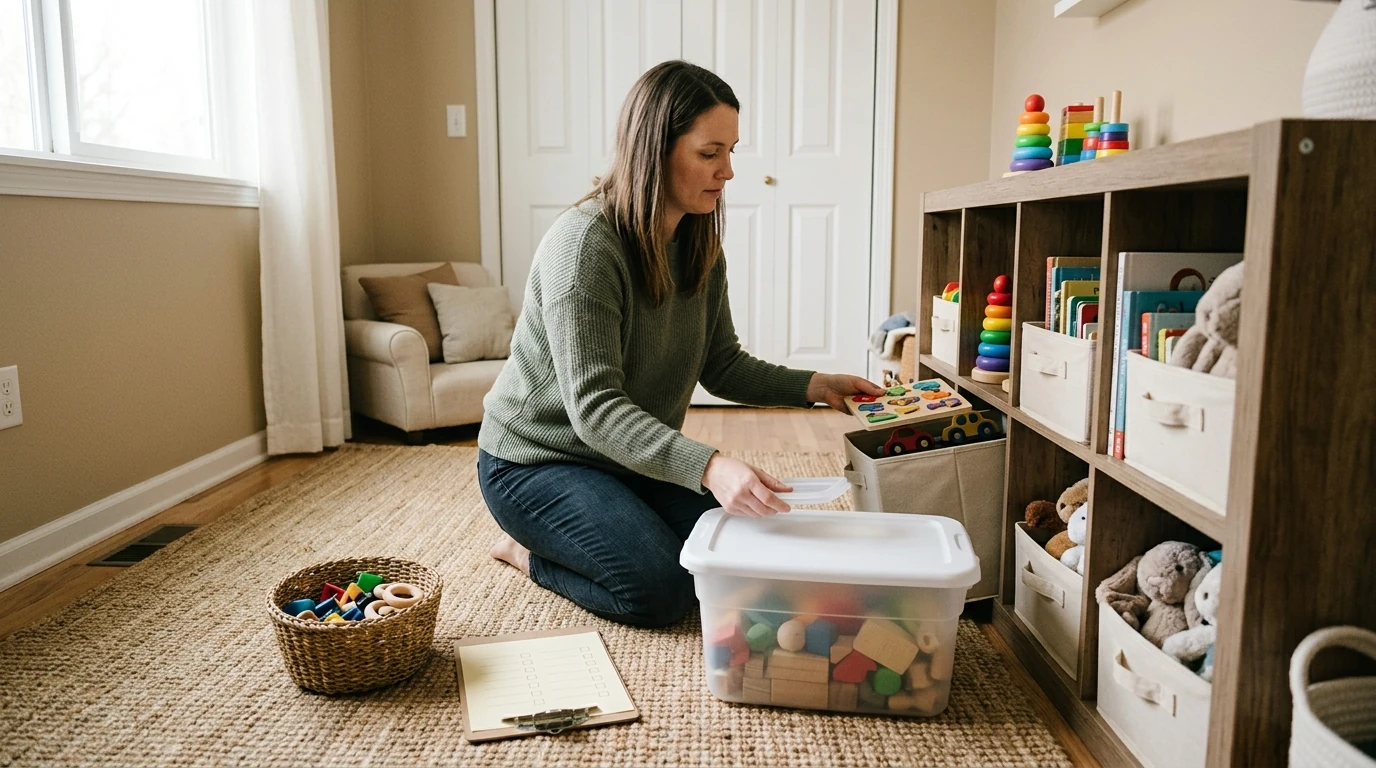
Toy clutter builds quickly because kids don’t just play—they “live” in their play spaces. A simple toy rotation system keeps the room functional without requiring a full overhaul every weekend. When fewer toys are available at once, it’s easier for children to scan options, choose something confidently, and stay engaged longer.
Rotation also reduces visual noise. Less stuff in sight often translates to calmer play and faster cleanup because every item has a clear place to return to. And instead of buying new toys for novelty, you can “shop” your own storage bins—bringing back something that feels fresh simply because it’s been out of view for a while. Most importantly, once each toy has a “home” (Play Now) and a “resting place” (Store), decision-making gets simpler: you’re not constantly renegotiating where things should go.
Think of toy management as four easy zones. You can use a shelf, a few bins, and a small staging spot near the door to make this work in almost any home.
Quick win: keep a small “parts basket” near the play area. Loose pieces go there first, then you decide weekly whether to reunite them, store the set, or retire it.
| Zone | What belongs here | Best container | Review frequency |
|---|---|---|---|
| Play Now | Current favorites, versatile basics, 6–12 items depending on age | Open bin / shelf basket | Weekly |
| Store | Seasonal toys, alternate sets, special-occasion items | Lidded bin with label | Every 2–6 weeks |
| Donate/Sell | Outgrown, duplicates, low-interest items in good condition | Bag/box near entry | Monthly |
| Repair | Missing parts, needs batteries, minor fixes | Small tote + parts baggies | Weekly |
A rotation routine only works if it fits your life. Instead of chasing an ideal schedule, pick a minimum rhythm you can keep during busy weeks, then add deeper resets when you have energy.
If sorting feels overwhelming, the fastest method is to limit the scope. Choose one bin or one shelf at a time—avoid dumping everything into a giant pile that becomes a second project.
Before you reintroduce stored toys, do a quick safety scan. Age-appropriate play matters, especially with small parts; see toy safety guidance from the American Academy of Pediatrics and basic choking hazard prevention from the CDC.
To make the system plug-and-play, use The Smart Toy Rotation & Storage Checklist (Printable Digital Download) as your weekly guide for sorting, swapping, and keeping toy “homes” consistent.
| Day | Time | Task | What gets rotated |
|---|---|---|---|
| Monday | 5–10 min | Quick reset + parts basket check | Nothing |
| Wednesday | 10–15 min | Swap one category | Puzzles or books |
| Friday | 10–15 min | Swap one category | Pretend play bin |
| Sunday | 20–30 min | Full tidy + prep next week | 2–4 items total |
When choosing what to keep accessible, prioritize toys that support open-ended play and developmentally appropriate exploration. The National Association for the Education of Young Children (NAEYC) offers helpful guidance on selecting toys that encourage meaningful play.
If cleanup is slowed by constant tiny trash (wrappers, broken crayons, dried stickers), a touchless bin in the play area can reduce friction. The 9L Smart Sensor Trash Can – Eco-Friendly, Touchless Waste Bin for Bathroom & Kitchen can help kids toss mess quickly without touching a lid.
A weekly 10–15 minute mini-reset keeps clutter from snowballing, while a fuller swap every 2–6 weeks works well for most families. Add a seasonal declutter to match changing interests and storage space.
A practical target is whatever fits neatly on your available shelves without stacking: often 6–12 core options for toddlers and a bit more for older kids if categories are clearly contained. Keep favorite comfort/regulation items accessible and rotate everything else by category.
Use lidded bins plus labeled pouches or zip bags for parts, and keep instructions/batteries together (taped inside the lid works well). Do a weekly “parts basket” sweep so sets don’t slowly dissolve into the room.









Leave a comment