
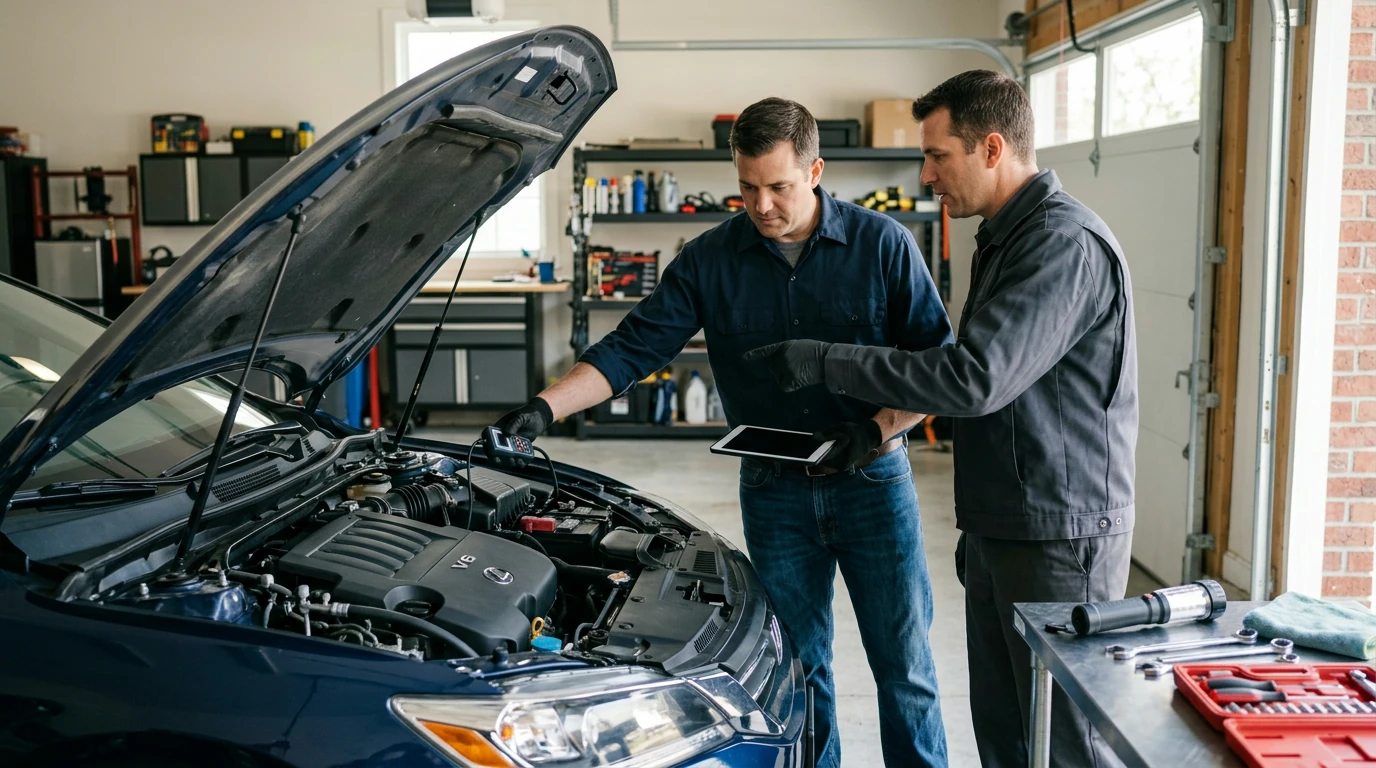
Self-diagnosing car issues starts with a calm, repeatable routine. Our team recommends you focus on symptoms, basic checks, and simple tools before replacing parts. The goal is to narrow the problem down safely, not to guess.
Write down the exact symptom: new noise, warning light, vibration, smell, leak spot, hard starting, overheating, or poor fuel economy. Note whether it happens only when cold, only at highway speed, only while braking, or only while turning. Patterns are often more valuable than a single clue.
With the engine off and cool, check fluid levels and condition: oil, coolant, brake fluid, power steering (if equipped), and washer fluid. Look for fresh wet spots, cracked hoses, loose clamps, broken belts, or corroded battery terminals. A bright flashlight, nitrile gloves, and shop towels make this safer and cleaner.
An OBD2 scanner is one of the most useful “first tools” for DIY diagnostics. Pull codes, save the freeze-frame data if available, and note whether codes return after you clear them. If you want a walkthrough for using AI-assisted symptom matching and smarter troubleshooting steps, visit our guide here: https://freshtrendshelf.com/guide-ai-car-symptom-diagnosis-troubleshoot-smarter/.
If you smell fuel, see active coolant spray, lose braking, hear loud knocking, or the temperature gauge spikes, park the car. Safety comes first, and continued driving can turn a small repair into a major one.
Choose one that reads and clears codes, shows live data, and supports your vehicle’s protocol; Bluetooth models are convenient if you prefer using your phone. If you plan to troubleshoot recurring issues, live data and freeze-frame support are especially helpful.











Leave a comment