Curious Cats Need Safer Spaces (Without Killing the Fun)
Curious cats explore with teeth, claws, and gravity—often all at once. Cat-proofing is about reducing preventable hazards (falls, choking, poisoning, burns) while still giving cats healthy outlets for climbing, scratching, and hunting behaviors. Start by securing the highest-risk zones first, then fine-tune each room so your home stays both cat-friendly and functional.
Start With a Fast Home Safety Scan
Before buying anything, do a quick, practical scan—fast enough to do today, thorough enough to catch common issues.
- Do a 10-minute walkthrough at cat height: look for dangling cords, unstable décor, small objects that fit in the mouth, and open water sources.
- Identify “hot spots” where risky behavior repeats (jumping onto the stove, chewing a specific cable, pushing items off a shelf).
- Prioritize fixes that prevent urgent harm: toxic plants, accessible medications, open windows without secure screens, and exposed electrical cords.
- Use a simple rule: if an item can be swallowed, tipped, or shattered, assume it eventually will be.
Windows, Balconies, and Doors: Prevent Falls and Escapes
- Install sturdy window screens designed for pets; check frames for gaps and loose corners where claws can pry.
- For sliding doors and balcony access, use a secondary physical barrier (pet gate or screened enclosure) rather than relying on supervision.
- Avoid window perches that clamp onto weak sills; choose models with stable supports and weight ratings, then test before use.
- Reduce “door dashing” with an entry routine: toss a treat away from the door, use a cat gate in a hallway, and keep carriers accessible for emergencies.
Electrical Cords, Chargers, and Small Electronics
- Bundle and route cords behind furniture or through cable raceways; keep charging stations off the floor.
- Use cord covers or spiral wraps for high-interest cables (phone chargers, laptop cords, headset wires).
- Unplug and store rarely used devices; cats often chew thin rubberized cables and earbud cords.
- Avoid leaving string-like items near electronics (ribbon, yarn, elastic bands), which can be swallowed and cause intestinal blockage.
Kitchen and Dining: Heat, Sharp Tools, and Food Risks
- Use stove knob covers or remove knobs when not cooking; keep pan handles turned inward.
- Never leave hot ovens or cooktops unattended with cats in the room; cats can jump up faster than a reflex can stop them.
- Store knives and skewers in closed drawers; use childproof latches if drawers are easily opened.
- Keep risky human foods (alcohol, caffeine, xylitol sweeteners, fatty scraps) out of reach; secure trash and compost with lidded containers.
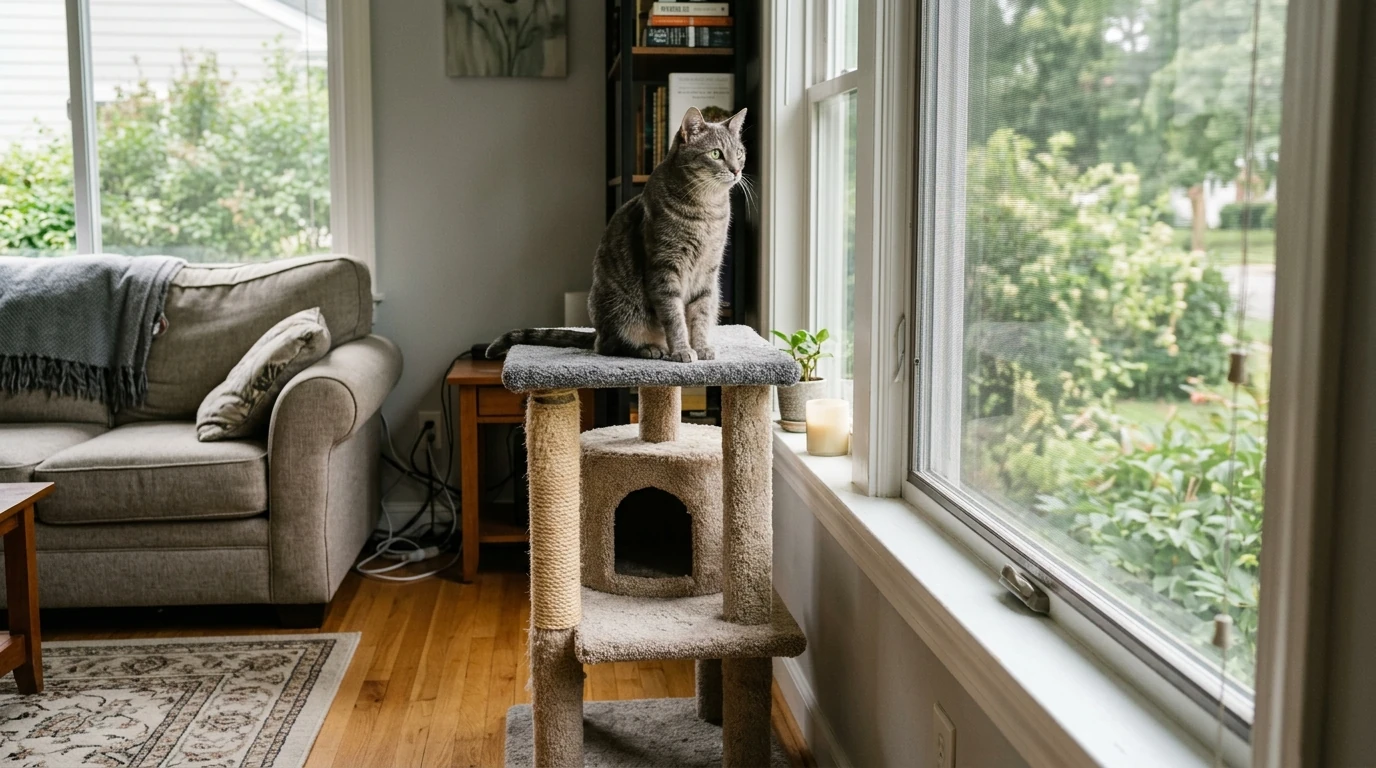
- Prevent counter surfing with attractive alternatives: a tall cat tree near (not on) the kitchen boundary and scheduled play before meal prep times.
If trash raiding is a repeat problem, a sealed, touchless bin can reduce odors and access points. A compact option like the 9L Smart Sensor Trash Can – Eco-Friendly, Touchless Waste Bin for Bathroom & Kitchen can be especially helpful in small kitchens or bathrooms where a traditional lidded can still gets nudged open.
Bathroom and Laundry: Water, Chemicals, and Strings
- Close toilet lids; some cats drink from toilets, and cleaning chemicals can linger in the bowl.
- Lock up detergents, pods, bleach, and disinfectants; store on high shelves or in latched cabinets.
- Keep razors, floss, cotton swabs, hair ties, and dental picks in closed containers; these are common choking and ingestion hazards.
- Run a “lint and string” check: secure loose threads from towels, bath mats, and laundry bags; avoid leaving sewing kits open.
Living Areas: Breakables, Houseplants, and Climbing Zones
For help identifying poisoning risks and what to do next, keep trusted resources bookmarked like ASPCA Animal Poison Control and the American Veterinary Medical Association (AVMA) pet safety guidance.
Bedrooms and Home Office: Strings, Medications, and Quiet Hazards
Room-by-Room Cat-Proofing Checklist
Quick Checklist by Room
| Room |
Top Risks |
Simple Fixes to Try First |
| Entryways & windows |
Escapes, falls, screen failures |
Install pet-grade screens; add a gate or buffer zone; keep carriers accessible |
| Kitchen |
Burns, sharp tools, toxic foods, trash raiding |
Knob covers; drawer latches; lidded trash; alternative perch nearby |
| Bathroom |
Chemical exposure, choking items, toilet drinking |
Close lids; latch cabinets; store floss/hair ties; covered bins |
| Laundry |
Detergent pods, strings, appliance entrapment |
Lock products; keep doors closed; check drum before starting machines |
| Living room |
Tip-overs, breakables, toxic plants |
Anchor furniture; museum putty; move unsafe plants; add a cat tree |
| Office/bedroom |
Cords, meds, craft supplies |
Cable raceways; sealed med storage; closed craft organizers |
Behavior-Friendly Fixes That Reduce “Mischief”
Emergency Readiness and Ongoing Maintenance
Printable Help for a Full Home Setup
If you want a structured, step-by-step setup with actionable checklists and guidance, A Practical Guide to Cat‑Proofing Your Space (digital eBook) is designed to make the process manageable room by room. It’s especially helpful for new cat parents, multi-cat homes, and renters who need non-permanent solutions.
For households that like tracking routines (monthly re-checks, cord audits, plant reviews), a simple digital planning companion can help you stay consistent—consider pairing your safety checklist with Creative Hobby Progress Tracker Ideas – Digital Ebook Guide to build a repeatable “reset day” habit.
FAQ
What’s the first thing to cat-proof in a new home?
Start with escape and fall prevention (windows, secure screens, doors), then remove immediate poisoning risks like medications, cleaners, and unsafe plants. After that, focus on cord management and anchoring tall furniture.
How can a rental be cat-proofed without drilling holes?
Use reversible options like tension-mounted gates, removable cable raceways, museum putty for décor, freestanding cat trees, adhesive cord clips, and closed storage bins. The goal is reducing access to hazards without permanent changes.
What should be done if a cat chews cords or swallows string?
Cover and reroute cords right away and offer safer alternatives for chewing and play. If string may have been swallowed, do not pull it—contact a veterinarian or poison control immediately.
Recommended for you













Leave a comment