
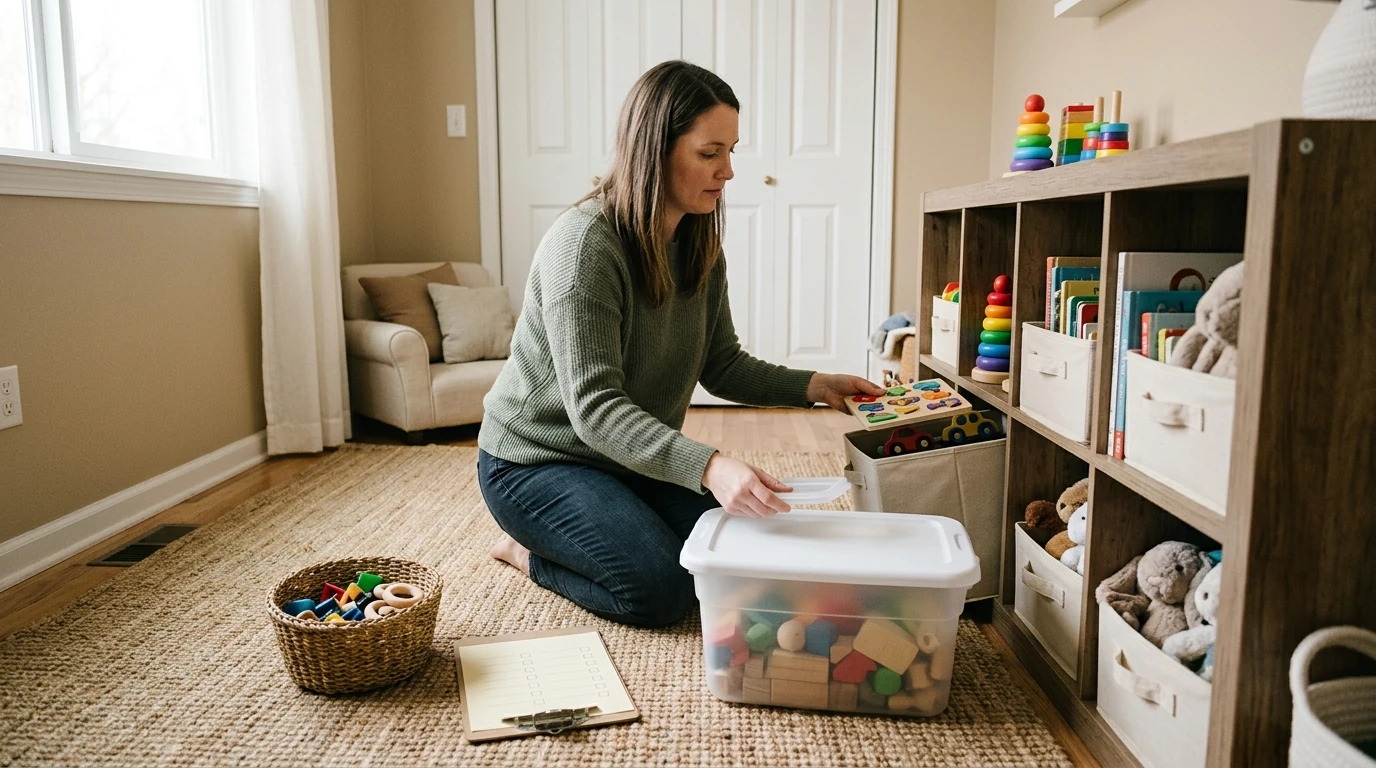
If you mean toys to swap in and out of your child’s play space, almost any toy can be part of a toy rotation. The easiest ones to rotate are toys that work well on their own and feel fresh after a short break. You don’t need a large collection: a few varied choices can give your child different ways to play without putting everything out at once.
We suggest choosing from several types of play rather than filling every spot with similar toys:
Our team recommends starting with a small selection that covers a few different activities. Keep a current favorite available, then store the remaining toys where your child can’t see them. When you swap toys, notice which ones still hold their attention; a toy doesn’t need to leave the play space just because the calendar says so.
Choose toys suited to your child’s age and abilities. Keep small parts away from children who may put them in their mouths, and follow the toy’s age guidance. If siblings share a play space, store older kids’ small-piece toys separately from younger children’s toys.
For an easy schedule and setup, see our weekly toy rotation plan for busy families. You can adjust it to fit your space and routine.
Spinning tops, gear toys, pinwheels, and some activity-center components turn or spin during play. Pick one that matches your child’s age and motor skills, and make sure its moving parts are secure.
We recommend swapping a few toys when your child seems ready for something different, rather than following a strict deadline. A weekly check-in is a simple starting point, but you can leave well-loved toys out longer.










Leave a comment