
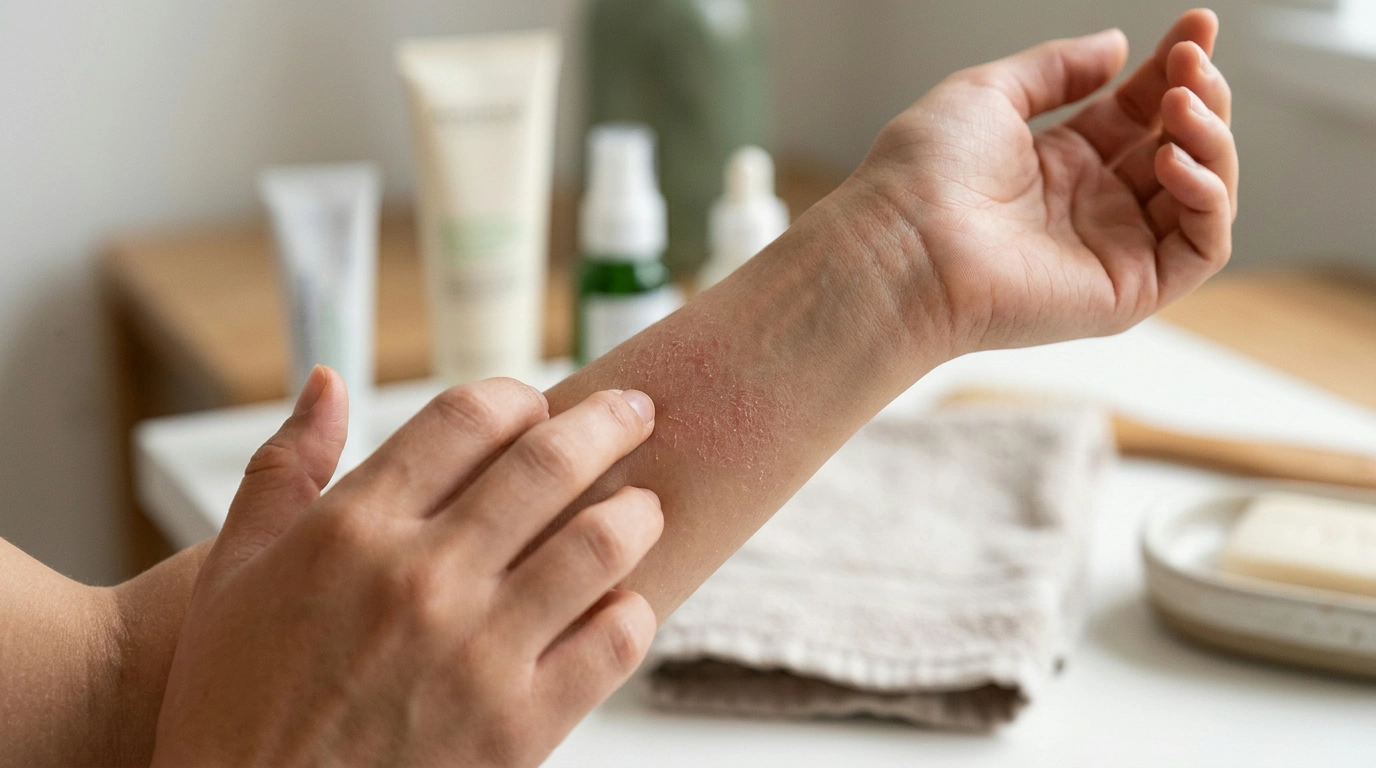
High pH skin often looks dry, dull, or irritated rather than noticeably different in one specific way. You might see flaky patches, redness, or a rough texture. Your skin may also feel tight after washing, even if it becomes oily later in the day. These signs can give you a reason to reconsider your routine, but appearance alone cannot tell you your skin’s pH.
Your skin’s surface is naturally slightly acidic. When that balance is disrupted, the skin barrier may have a harder time holding moisture and staying comfortable. You may notice stinging when you apply products that usually feel fine, or find that your skin feels sensitive to water and cleansing. Makeup may cling to dry areas, while other spots appear shiny.
Breakouts can occur alongside dryness or irritation, too. That combination can be confusing: it may tempt you to scrub harder or use a stronger cleanser, even though those steps can leave your skin feeling more uncomfortable. Redness, flaking, and pimples have many possible causes, so we would not treat any one of them as proof of high pH.
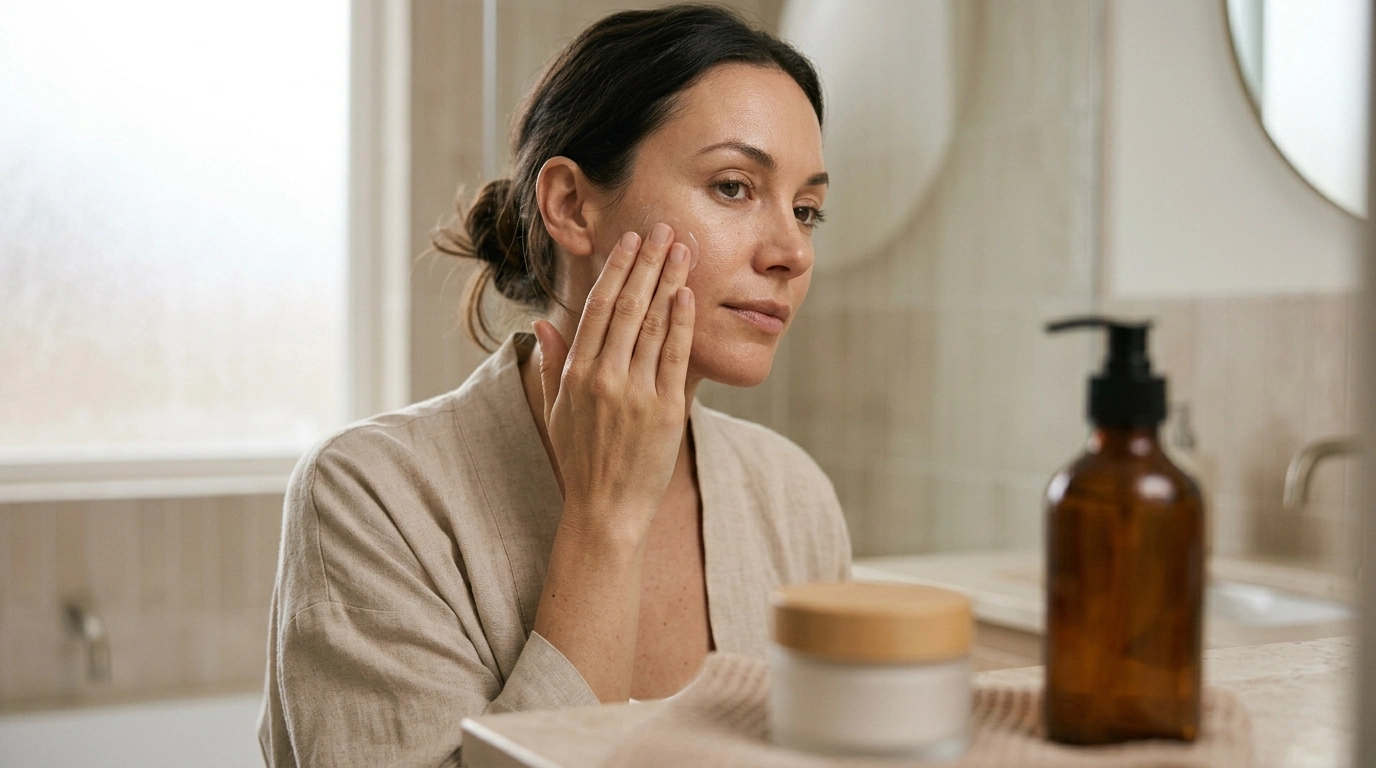
Start with a gentle cleanser and lukewarm water. Wash without scrubbing, then apply a moisturizer while your skin is still slightly damp. Our team recommends choosing products that leave your skin comfortable rather than squeaky-clean; a tight feeling after cleansing is a useful cue to try a milder option.
If you use exfoliating acids, retinoids, or acne treatments, avoid introducing several new ones at once. Give your skin a chance to settle, and reduce use of a product if it repeatedly causes burning or peeling. You can learn more about the acid mantle and everyday habits that support it in our guide to skin pH.
Persistent redness, painful cracks, oozing, or a rash that keeps returning deserves a conversation with a dermatologist. The goal is not to make your skin look a particular way overnight. It is to build a routine that leaves it feeling comfortable and well moisturized.
At-home skin pH tests may give you a rough reading, but the result can vary with your testing method and what is on your skin. If irritation is your concern, focus on how your skin responds to a gentle routine and seek professional advice if symptoms persist.











Leave a comment