
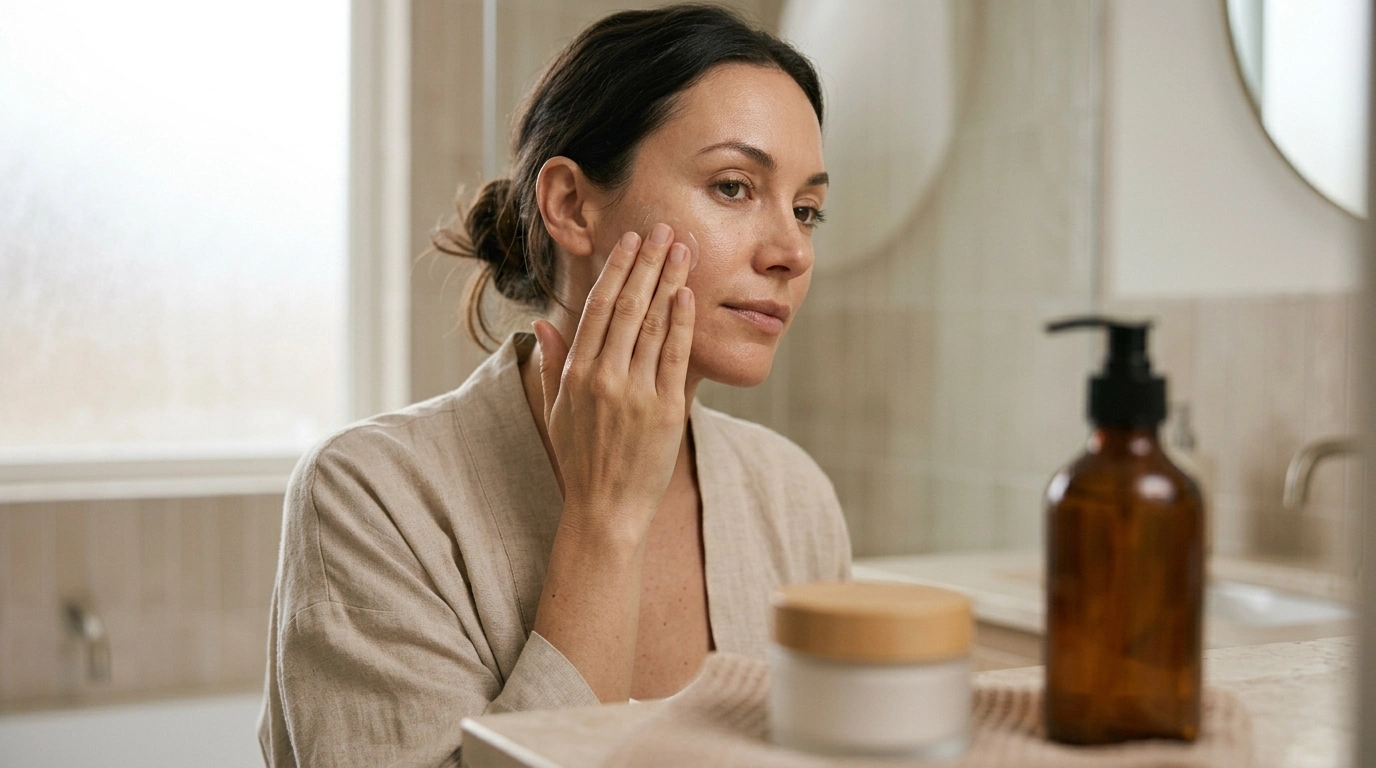
Skin pH influences the barrier that keeps moisture in and irritants out. When that balance drifts too alkaline or too acidic, issues like tightness, sensitivity, dullness, breakouts, and uneven texture can show up. This guide breaks down what skin pH is, what disrupts it, and practical steps to support a healthy, comfortable glow.
pH is a scale (0–14) that describes how acidic or alkaline something is; 7 is neutral. Healthy facial skin typically sits slightly acidic, often cited around the mid–4s to mid–5s, which supports the “acid mantle.” That mildly acidic surface helps key enzymes function properly, supports the skin barrier, and discourages the overgrowth of certain unwanted microbes.
It’s also worth keeping pH in perspective: pH is only one piece of skin health. Hydration, barrier lipids, inflammation, and routine choices all interact with it—so the goal is usually a comfortable, resilient barrier rather than chasing a single number.
A stable, slightly acidic surface helps keep the outermost layer cohesive, reducing moisture loss and roughness. When the barrier is supported, skin is often less reactive (less stinging with products that used to feel fine), clearer-looking (less prone to congestion cycles), and more radiant (a smoother surface reflects light more evenly).
| What you notice | Possible pH-related pattern | Practical first step |
|---|---|---|
| Tightness after cleansing | Cleansing routine may be too stripping or too alkaline | Switch to a gentle, low-foam cleanser and shorten cleanse time |
| Stinging with simple moisturizers | Barrier stress; pH + lipid disruption | Pause strong actives, use a bland moisturizer, add sunscreen daily |
| Flaky patches with oiliness | Dehydration + impaired barrier function | Layer humectant + moisturizer; avoid over-exfoliating |
| More frequent breakouts | Barrier imbalance can worsen inflammation and congestion | Simplify routine; reintroduce actives slowly, one at a time |
| Dull, rough texture | Slow recovery from irritation and uneven shedding | Reduce friction; use gentle exfoliation only as tolerated |
High-foam surfactants, very hot water, and long cleanse times can strip protective lipids. Even if the pH shift is temporary, the barrier stress can linger—showing up as tightness, squeakiness, or increased sensitivity.
Stacking acids, scrubs, peels, and retinoids can outpace the skin’s ability to recover. The result can look like “more texture,” when it’s actually irritation plus impaired shedding.
Dehydration makes skin more reactive and less tolerant of treatment products. Moisturizer helps reinforce the barrier so the skin can handle gentle actives without constant flare-ups.
Cold, wind, low humidity, chlorine, and pollution can increase irritation and dryness. Seasonal changes are a common reason a previously “perfect” routine suddenly feels uncomfortable.
Eczema, rosacea, and prescription acne treatments can change tolerance. During flares, a simpler routine often supports comfort and recovery. For foundational skin-care guidance, the American Academy of Dermatology Association offers practical everyday recommendations, and barrier overviews from the National Eczema Association and the Cleveland Clinic are helpful for understanding what “barrier damage” can look like.
If skin feels tight after washing, simplify first: cleanse once at night, keep water lukewarm, and cap cleansing at about 20–30 seconds. In the morning, rinsing with lukewarm water may be enough unless skin is very oily or you sweat heavily overnight.
Apply moisturizer while skin is slightly damp to lock in hydration. If tightness shows up midday, it’s often a sign the barrier needs more consistent moisturizing rather than more exfoliation.
UV exposure can worsen inflammation and slow barrier recovery. Choose a sunscreen you can reapply without stinging—comfort matters, because consistency is what protects the barrier long-term.
Facial skin is typically slightly acidic, often cited around the mid–4s to mid–5s, but it varies by person and even by area of the face. Focus on comfort and barrier stability (less stinging, less tightness, smoother texture) rather than trying to hit one exact number.
Yes—cleansers can temporarily shift the skin’s surface pH, and harsher or more alkaline formulas may be more disruptive for some people. Gentle cleansing with lukewarm water, shorter cleanse times, and moisturizing right after can help skin bounce back.
It can take a few days to a few weeks depending on how irritated the skin is and how many stressors are involved. Pause strong actives, keep cleansing gentle, moisturize consistently, and wear sunscreen daily; seek dermatology care if there’s severe burning, cracking, or a persistent rash.











Leave a comment