
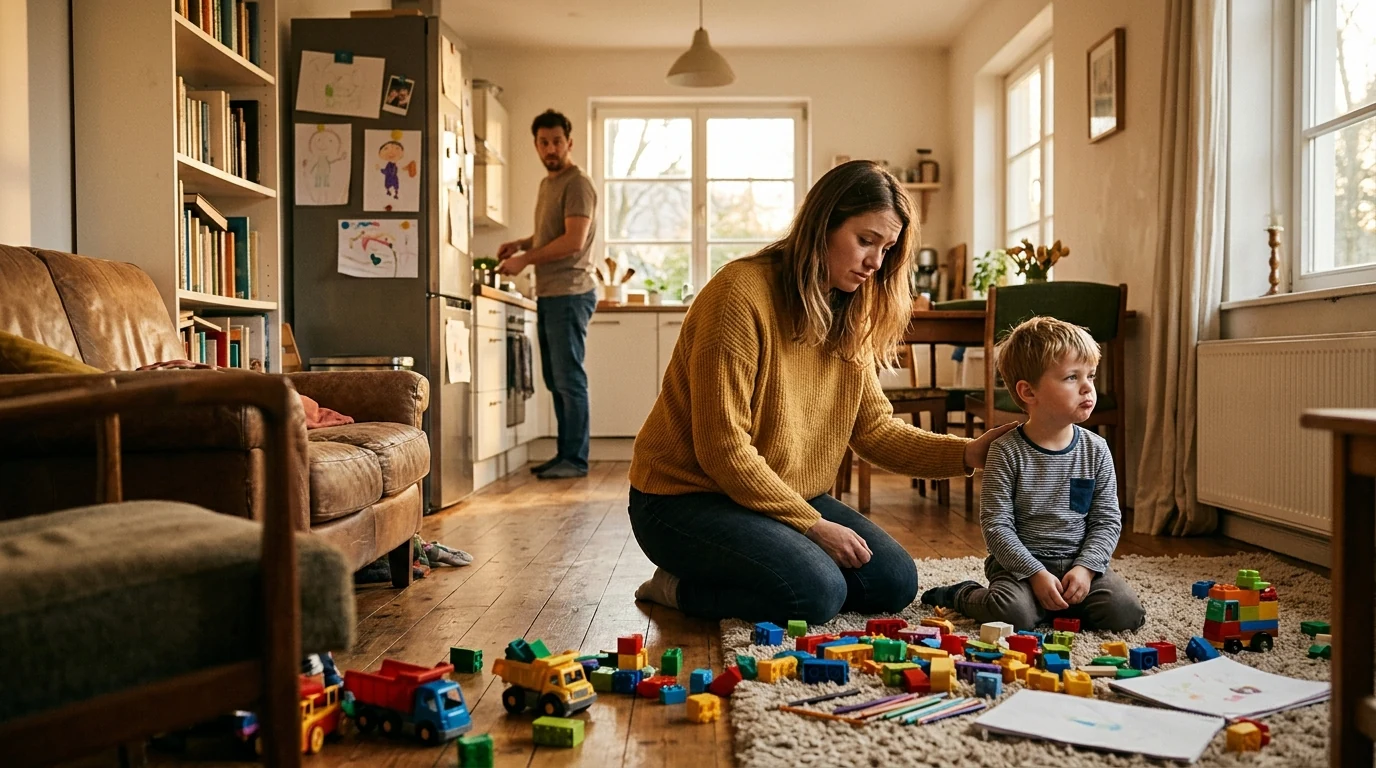
Gentle parenting can be a strong approach for connection and long-term skill-building, but the downside is that it’s easy for “gentle” to get confused with “permissive.” When limits aren’t clear or consistently held, kids may push harder, routines can unravel, and you can end up doing more negotiating than parenting.
Explaining feelings and choices is helpful, but when emotions are high, too much talking can overwhelm your child and drain your energy. A calmer pattern is: short boundary, brief empathy, then follow-through—save longer teaching for after everyone is regulated.
Gentle parenting asks you to stay calm, validate feelings, and guide behavior—often while you’re stressed. If you’re the only one doing it, burnout can show up fast. Our team recommends building “low-effort supports” into your day: visual routines, a simple timer for transitions, and a predictable reset space with a few sensory items your child can use safely.
If one adult sets a limit and another negotiates or rescinds it, kids learn to keep escalating. A shared script helps: decide on 2–3 non-negotiables (like hitting, bedtime, leaving the playground) and agree on the exact follow-through so your child experiences the same boundary every time.
Highly sensitive, spirited, or neurodivergent kids may need clearer external scaffolding—fewer words, more predictable steps. Tools like “first/then” cards, a short rule chart at eye level, and a consistent consequence you can actually carry out tend to make gentle parenting more effective, not less.
When safety is involved (running off, throwing objects, aggression), gentle parenting still includes decisive intervention. It’s okay to block, move your child, or end an activity immediately—then validate feelings afterward.
If you want a practical way to combine calm connection with firm limits, we’ve laid it out step-by-step here: our sensitive parenting checklist for calm limits in hard moments.
Use a short, repeatable phrase and follow through the first time: “I won’t let you hit. I’m moving back.” Keep your voice low, reduce extra explanations, and revisit the lesson once your child is calm.












Leave a comment