
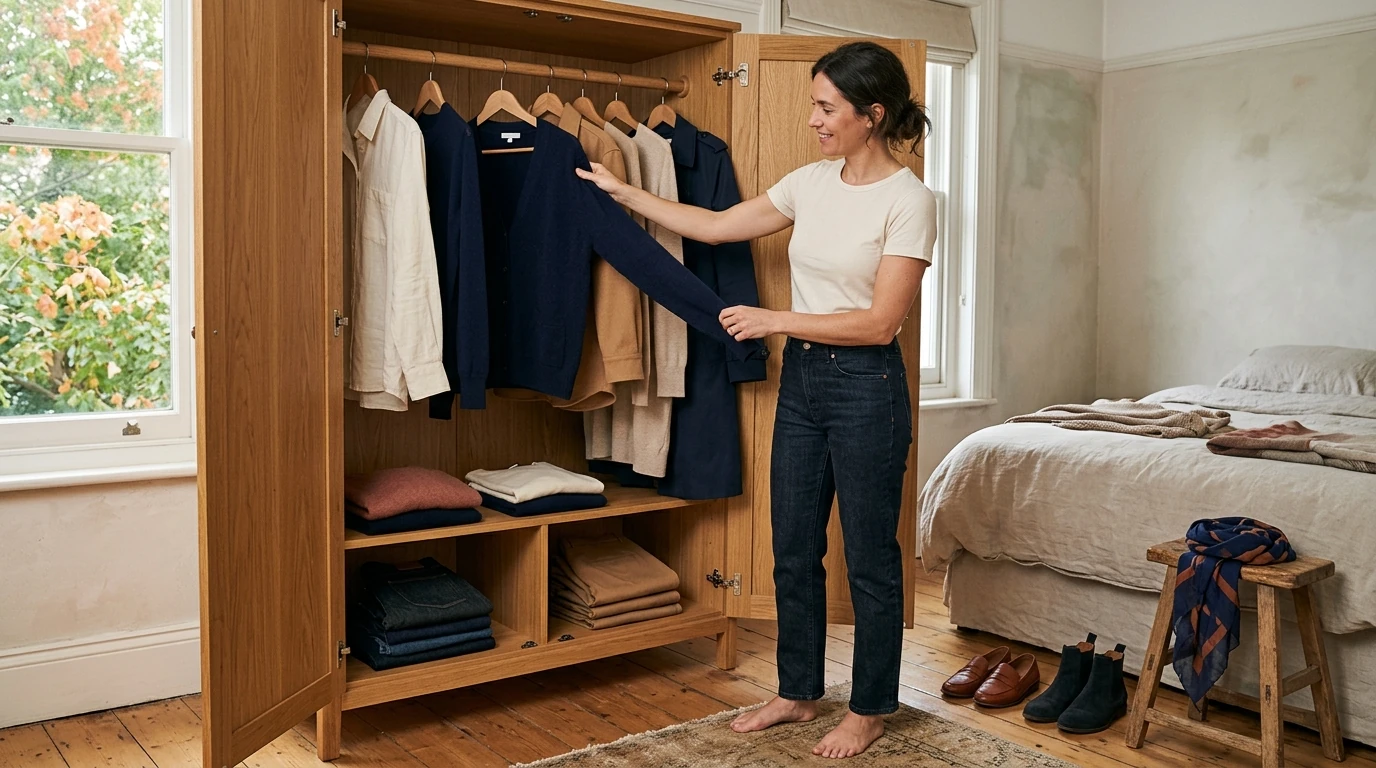
Season changes can make a closet feel either limited or overwhelming. A smoother transition comes from a small set of reliable layers, a flexible color palette, and a simple plan for rotating staples without buying a whole new wardrobe. This guide breaks down practical layering formulas, a capsule approach for in-between weather, and a planner-style workflow that makes daily outfits faster and more consistent.
Transition weather isn’t “mild”—it’s unpredictable. The same day can swing 10–20°F between a chilly morning commute and a sunny afternoon, especially when wind is involved (NOAA’s wind chill guidance helps illustrate how fast it can feel colder than the thermometer suggests: NOAA National Weather Service – Wind Chill).
Another curveball: indoor climates. Strong A/C, drafty entries, and overheated offices can make a perfectly good outfit feel wrong within minutes. The EPA’s overview of indoor environments is a helpful reminder that “inside” isn’t always stable: EPA – Indoor Air Quality.
The simplest goal is also the most effective: build 10–15 repeatable outfit formulas that handle quick temperature shifts with removable layers.
Instead of swapping your whole closet twice a year, create a mini “bridge” lineup that lives front and center for a few weeks. Keep it tight, dependable, and easy to mix.
If you want a more structured checklist for this phase (including a planner format you can reuse every season), the digital guide Mastering the Art of Changing Outfits Between Seasons – Seasonal Wardrobe Transition Guide, Layering Tips, Capsule Closet Planner & AI Style eBook is designed specifically around bridging weeks and outfit repeats.
Good layering is less about piling on pieces and more about making smart, clean choices that can be added or removed without disrupting the look.
| If the day gets… | Swap this | For this | Why it helps |
|---|---|---|---|
| Warmer by midday | Heavy sweater | Light cardigan or breathable knit | Keeps the look layered without overheating |
| Cooler in the evening | Bare ankles | Socks or tights + closed-toe shoes | Adds warmth with minimal bulk |
| Windy or rainy | Open jacket | Water-resistant shell or trench | Blocks wind and protects fabrics |
| Indoor A/C strong | Short sleeve only | Base tee + removable third piece | Easy temperature control at work or errands |
| Unpredictable all day | Single outerwear option | Packable layer in tote | Flexible comfort without changing the whole outfit |
For people who like a done-for-you structure (including outfit prompts that keep repeats feeling fresh), Mastering the Art of Changing Outfits Between Seasons – Seasonal Wardrobe Transition Guide, Layering Tips, Capsule Closet Planner & AI Style eBook can function like a seasonal reset button.
If you enjoy tracking progress in other areas of life, a dedicated template can make consistency easier to maintain. The Creative Hobby Progress Tracker Ideas – Digital Ebook Guide is a helpful companion for building routines—great for anyone who likes seeing momentum on paper.
Look for a resource that combines layering advice, capsule planning, and a repeatable workflow you can reuse each season. For a step-by-step transition plan plus a capsule closet planner and AI-assisted styling ideas, see: Mastering the Art of Changing Outfits Between Seasons – Seasonal Wardrobe Transition Guide, Layering Tips, Capsule Closet Planner & AI Style eBook.
A practical range is about 12–18 core pieces, depending on laundry frequency and how extreme your temperature swings are. A strong starter mix includes 3–5 tops, 2–3 mid-layers, 1–2 outer layers, and 2–3 bottoms plus flexible shoes.
Start with a breathable base (cotton tee, lightweight long sleeve, or thin merino), add a versatile mid-layer (cardigan or overshirt), and finish with a protective layer (trench or shell). Following the thin-to-thick rule keeps you warm without feeling bulky.
Rely on outfit formulas and rotate one variable at a time: swap shoes, change the third piece, or switch accent colors while keeping neutrals consistent. Accessories like belts, scarves, and tights also create noticeable variety, especially when you track combinations and repeat them intentionally.









Leave a comment