

Viral content rarely happens by accident. It’s usually the result of repeatable patterns: a strong hook, one clear emotion, an easy-to-share takeaway, and distribution that matches the platform. AI can speed up the messy middle—idea generation, angle-finding, hook variants—but only when it’s guided by a structured workflow. Below is a practical system to generate more “worth posting” ideas, filter them quickly, and turn the best concepts into posts that earn shares, saves, stitches, and reposts. For more guidance, see Six ways to unlock social media success in veterinary ….
When those pieces are present, distribution systems tend to help you rather than fight you. Platform recommendations are built to match content to likely viewers, so clarity and watch/engagement signals matter. Helpful references include TikTok’s overview of how recommendations work (TikTok ranking signals), YouTube’s discovery explainer (Search and Discovery), and Meta’s notes on Instagram recommendations (Recommendations explained). For further reading, see Reporter’s Guide to Detecting AI-Generated Content.
AI output quality is mostly input quality. Before generating ideas, set constraints that force relevance.
| Input | Examples | Why it matters |
|---|---|---|
| Audience pain | “I don’t know what to post”, “No one engages” | Anchors ideas in real demand |
| Audience desire | “More clients”, “More followers”, “More confidence” | Creates clear outcomes for hooks |
| Format constraint | 7-second hook + 30-second payoff | Prevents vague, unfilmable ideas |
| Proof assets | Screenshots, before/after, case studies | Makes concepts instantly more believable |
| Brand stance | Contrarian take, strict principles, signature framework | Improves memorability and shares |
Use a pipeline that starts wide, then narrows hard. This avoids obsessing over the first “decent” idea and helps you find the strongest framing.
Before you spend time scripting, filming, or designing, run ideas through fast tests that catch “meh” concepts early.
| Criteria | Score 0–3 | Notes |
|---|---|---|
| Clear promise fast | ||
| Strong emotion | ||
| Share reason | ||
| Proof included | ||
| Easy to execute | ||
| Fits your audience | ||
| Platform-native format |
If you want a ready-to-use workflow and reusable templates, explore AI Brainstorming Viral Content Ideas That Actually Spread – Digital Guide Using ai to brainstorm viral content ideas for Creators & Marketers.
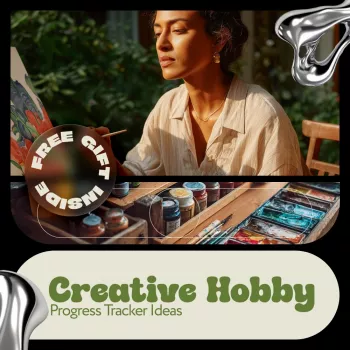
For creators who also want an easy way to stay consistent and measure progress across creative projects, Creative Hobby Progress Tracker Ideas – Digital Ebook Guide can help you keep momentum and document wins you can later turn into proof-based content.
AI helps most with volume and variation—more ideas, more angles, more hook options in less time. Whether a post spreads still depends on audience fit, proof, execution quality, and distributing it in a platform-native way.
A solid baseline is 30–50 raw ideas, then narrow to the top 10 based on relevance and ease. From there, develop 3–5 into full posts using a quick scorecard and prioritizing concepts with obvious proof.
Feed AI real audience language, specific examples, personal constraints, and your strongest opinions or frameworks. Then rewrite the final hooks with brand-specific details and add proof assets (results, screenshots, demos) so it sounds like you—not a template.











Leave a comment