
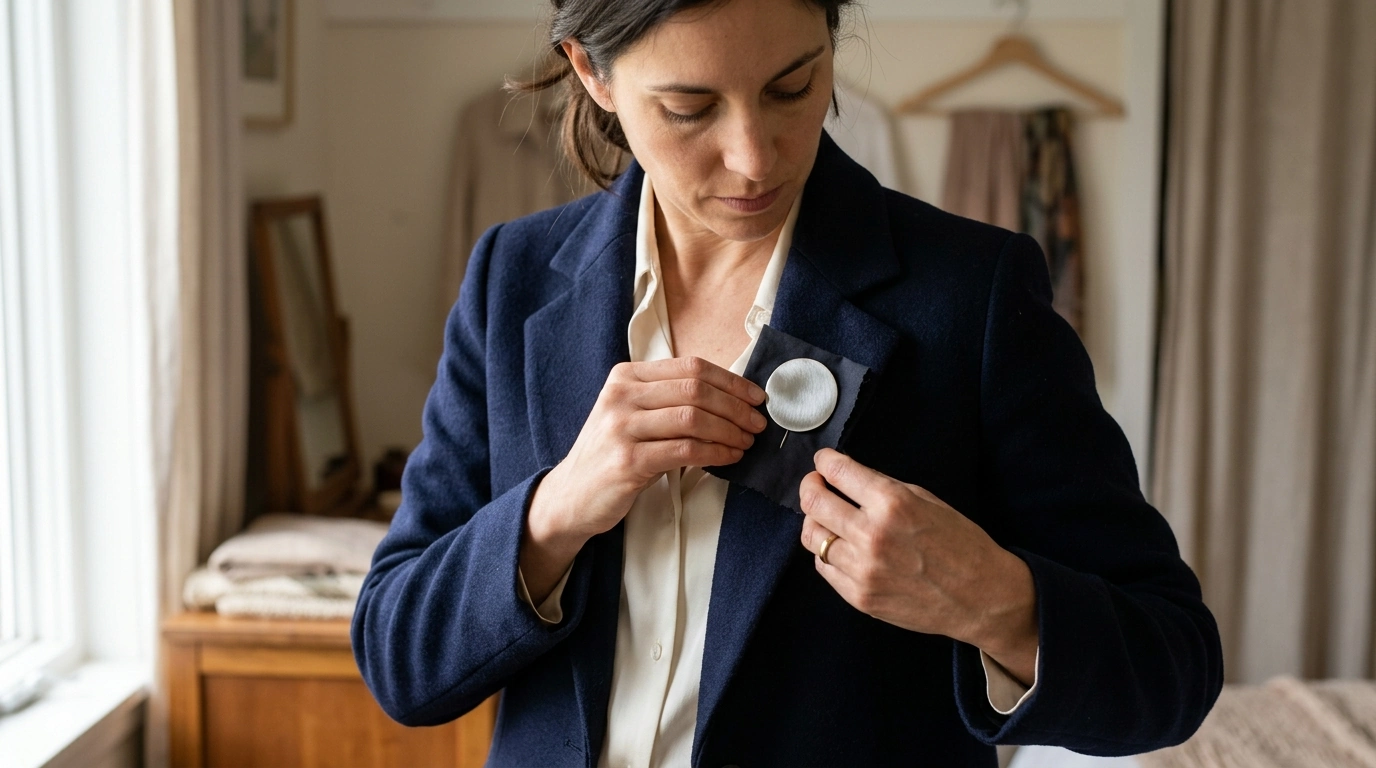
Brooches can transform everyday basics and special-occasion outfits—when they’re placed with intention and pinned in a way that protects delicate fabrics. Use this simple checklist approach to get consistent results: start by choosing a brooch that suits the fabric and silhouette, pick a placement that flatters the neckline, then secure it so it stays put without pulls, puckering, or snags.
Before you pin anything, treat the brooch like you would a handbag or a pair of shoes: it needs to “match” the outfit’s structure and visual scale.
Placement is what makes a brooch look styled rather than random. The best spot depends on what you want to emphasize: face, waist, neckline, or an accessory.
| Outfit | Best Placement | Why It Works | Fabric Notes |
|---|---|---|---|
| Blazer or suit jacket | Lapel or shoulder seam | Frames the face and looks polished | Works best on wool, tweed, suiting; reinforce lighter blends |
| Button-down shirt | Collar point or near top button | Adds interest without fighting the placket | Avoid very sheer poplin; use a backing patch if needed |
| Crew neck sweater | Offset near collarbone | Breaks up solid knits and draws the eye upward | Choose lighter brooches for loose knits to prevent sag |
| Wrap dress | At the wrap closure or shoulder | Secures the wrap and adds a focal point | Reinforce jersey and silky fabrics before pinning |
| Coat or trench | Lapel, pocket edge, or shoulder | Visible outer-layer statement | Structured fabrics handle heavier pieces well |
| Scarf | At a fold or knot | Keeps scarf in place and looks intentional | Pin through multiple layers; avoid delicate weaves |
Beautiful placement doesn’t matter if the brooch leaves marks behind. A few small habits make a big difference, especially on silk, chiffon, lace, or fine knits.
For general care guidance on delicate textiles, the Smithsonian’s textile care basics are a helpful reference: Smithsonian Institution — Caring for Textiles.
If you enjoy a little fashion history while building your own “signature placement,” the Met’s jewelry overview provides helpful context on how ornament has been used across eras: The Metropolitan Museum of Art — Jewelry.
Pin through structured areas like seams, lapels, plackets, or thicker bands, and use a small felt/fabric backing patch to distribute weight on delicate textiles. For extra stability, pin through two layers (a fold or facing) and make sure the clasp fully locks so the brooch doesn’t wobble and pull fibers.
Reliable options include the shoulder/strap, an offset spot near the collarbone, the wrap closure on a wrap dress, a side waist gather, or centered at the neckline if the fabric is supportive. Choose a spot that flatters your neckline and make sure the dress fabric can handle the brooch’s weight without puckering.
Yes—choose a lightweight brooch, avoid very loose or open knits, and pin through sturdier areas like a collar, ribbed band, or layered fold. A backing patch helps prevent stretching, and rotating placement reduces long-term wear in one spot.











Leave a comment