
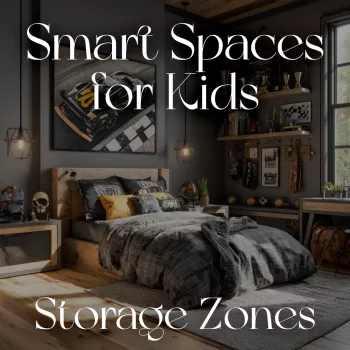
A kid-friendly bedroom works best when storage is predictable: every activity has a “home,” kids can reach what they use, and cleanup takes minutes—not negotiations. Storage zones turn a clutter-prone room into a set of simple destinations, so your child always knows where things go (and you’re not re-sorting the same pile every weekend).
A storage zone is a dedicated area for one category of items—clothes, books, art supplies, toys, or sports gear. Instead of stuffing everything into a few random bins, zones create a repeatable path for finding and returning items.
Zones reduce decision fatigue because kids don’t have to reinvent the cleanup plan each time. When items are visible, labeled, and placed at kid height, zones also support real independence: kids can start and finish an activity without asking for help at every step. Most importantly, zones prevent “everything bins” that get messy fast and are hard to maintain once the room gets busy.
Before buying containers, take one short reset session to set the room up for success.
If you want to make “reset time” easier, a dedicated trash/recycling spot helps you move quickly through papers, packaging, and broken bits. A touchless option like the 9L Smart Sensor Trash Can – Eco-Friendly, Touchless Waste Bin for Bathroom & Kitchen can be handy in a craft-heavy household (especially when hands are full of scraps).
Most bedrooms run smoothly with a handful of repeatable zones. Build them around what your child does every day.
| Zone | Best location | What belongs here | Storage that holds up |
|---|---|---|---|
| Sleep + comfort | Next to bed | Bedtime books, water, comfort item | Small basket, narrow shelf |
| Clothing + getting-ready | Closet/dresser area | Everyday clothes, pajamas, socks | Low drawers, labeled dividers |
| Play | Open floor area near storage | Big toy categories | Open bins, cube shelves |
| Read + quiet | Low-traffic corner | Books, puzzles, calm toys | Low bookcase, front-facing ledge |
| Create/make | Desk/table area | Markers, crayons, paper, scissors (age-appropriate) | Portable caddy, paper tray |
| School + admin | Near desk/door | Backpack, forms, library books | Wall hooks, file bin |
The best system is the one your child can use without you. Build every zone with kid logic in mind.
Zones stay the same, but the containers and rules should mature with your child.
Maintain a clear pathway from bed to door—no bins that block exits or create tripping zones. For more guidance, review CPSC tip-over prevention and the American Academy of Pediatrics’ general home safety tips.
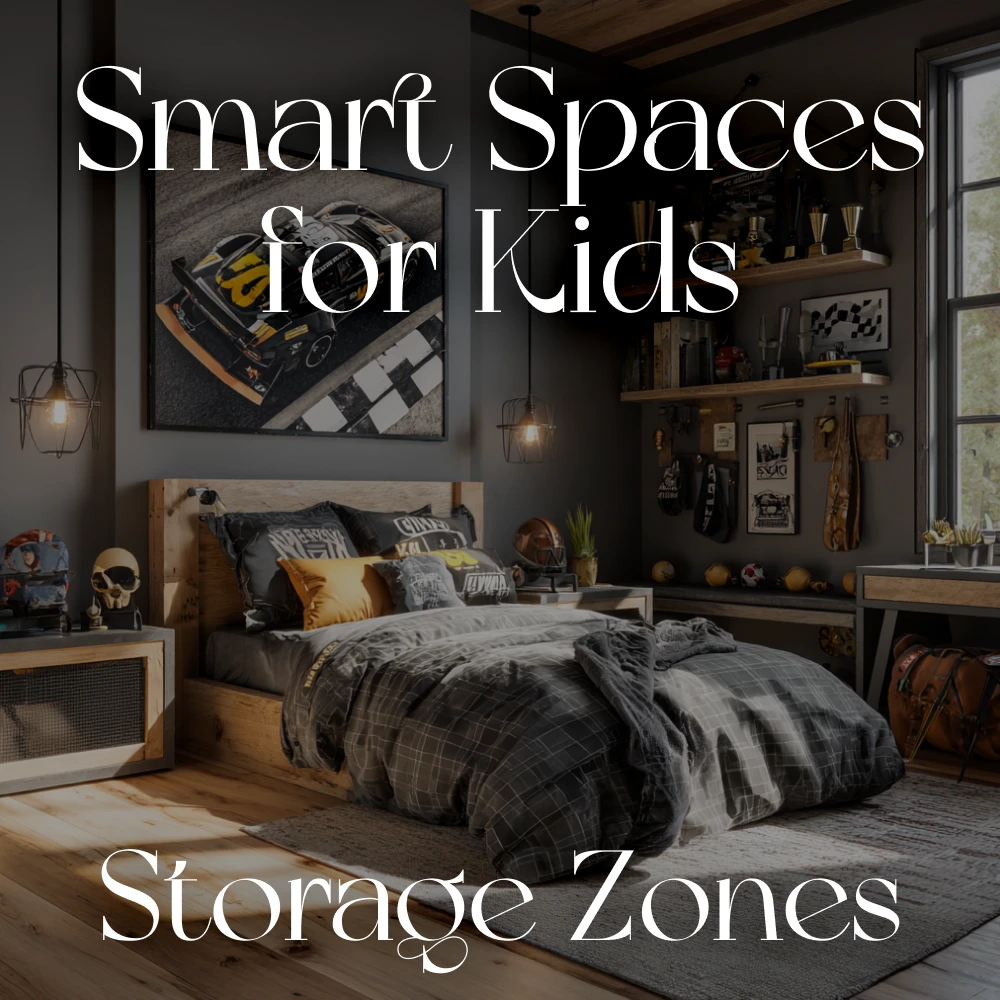
If you want a clear, repeatable way to plan zones (especially for small bedrooms or shared rooms), the Smart Spaces for Kids digital guide walks through how to translate common pain points—overflowing toys, messy floors, lost school items—into practical storage decisions. It’s designed to help kids understand the system, not just rely on adults to “fix the room.”
Most rooms work best with 4–6 core zones (sleep, clothing, play, read, create, and school). For younger kids, fewer zones are easier to remember; add a new zone only when one category repeatedly causes clutter.
Use fewer categories with larger bins, rotate toys, and set a “one bin out at a time” rule. A quick weekly reset plus a donate box prevents overflow from becoming the new normal.
Make daily items reachable, label with pictures/words, and keep a 5-minute reset routine. A stray-items bin and a reference photo of the finished setup help kids self-correct without debating where things go.







Leave a comment