
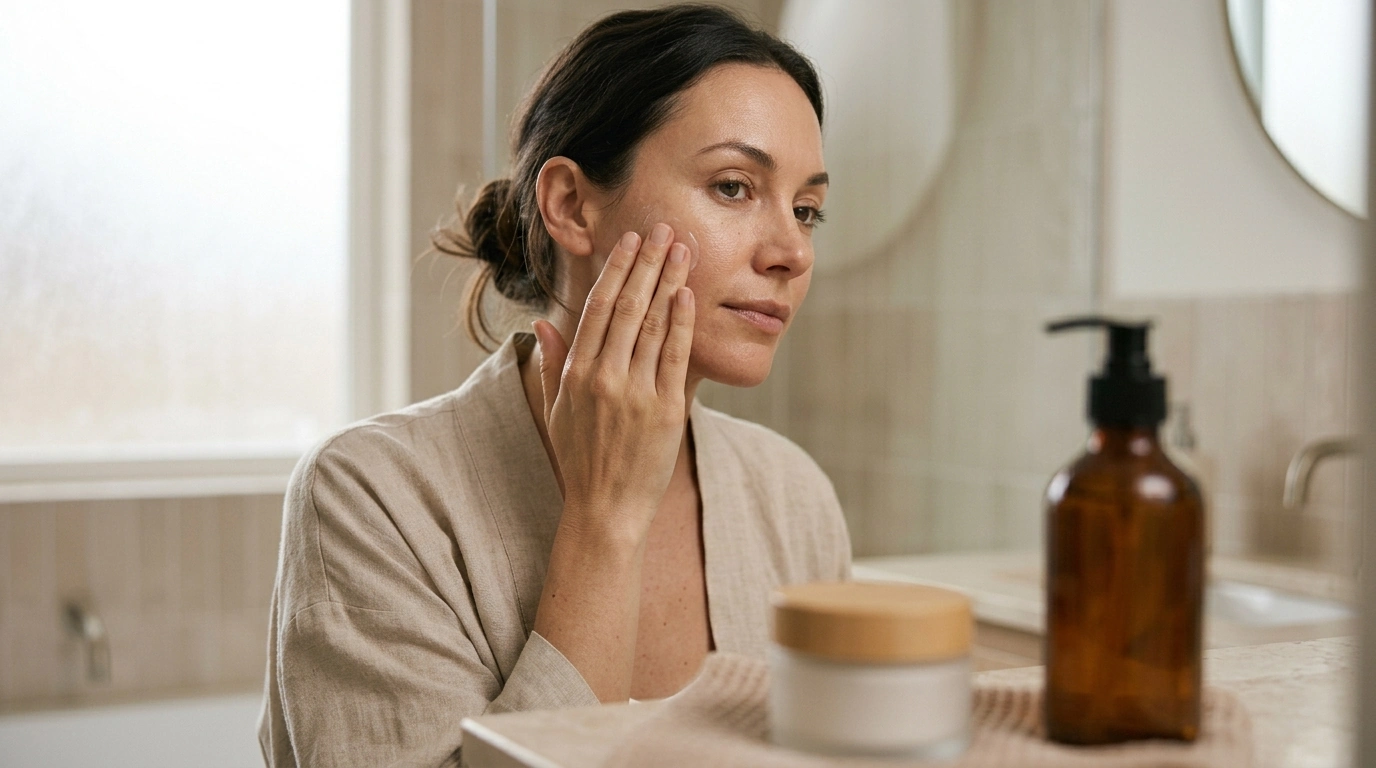
Healthy skin usually has a slightly acidic surface pH, commonly around 4.5 to 5.5. This acidity helps support the skin barrier and its acid mantle, a thin protective film made up of oils, sweat, and other natural substances. Your skin does not need to sit at one exact number to be healthy—the reading can vary by body area, age, and other factors.
The skin barrier helps hold on to moisture and protect against irritants. When that barrier is working well, skin is generally better able to stay comfortable and resilient. Frequent use of harsh cleansers or other irritating products may leave skin feeling tight, dry, or sensitive. Those symptoms can have many causes, though, and do not confirm that your skin’s pH is out of balance.
Choose a gentle cleanser that does not leave your skin feeling stripped, and follow with a moisturizer suited to your skin type. Avoid over-cleansing and introduce new active ingredients gradually, especially if your skin is easily irritated. A product’s pH alone does not determine whether it will work well for you; its ingredients and how your skin responds matter, too.
You usually do not need to measure your skin’s pH at home. If persistent redness, dryness, stinging, or irritation is a concern, consider simplifying your routine and checking in with a dermatologist. For more detail on the skin’s acid mantle and ways to care for it, read the complete guide to skin pH and balance.
For The Ideal Skin pH: What a Healthy Balance Looks Like, the best answer depends on fit, material, care instructions, and how the product will be used day to day.
If your skin feels persistently tight, dry, itchy, or stings after cleansing, the cleanser may be irritating or drying for you. Try a gentler option and seek professional advice if discomfort continues.











Leave a comment